

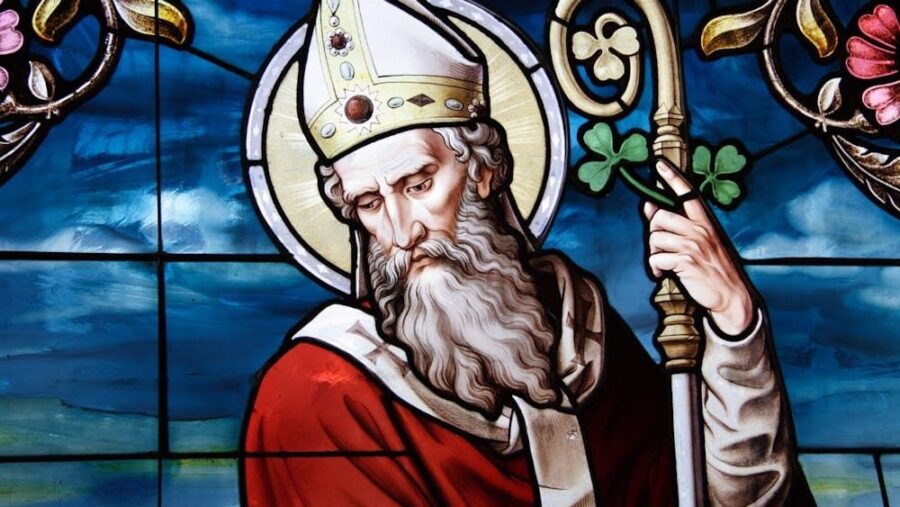
Gospel & Reflection for St. Patrick’s Day.

Reflection
Friends, Angela Davis is an African-American communist, feminist, academic and author. Born in Birmingham, Alabama, she has always been proud of her African heritage and has been involved in far-left politics all her life. She rose to fame during the tumult of the 1960’s and she played a significant role in shaping many of the controversial ideas from that time and which are still playing out in society today. Her absolutism with issues of identity, politics, and social direction always seemed firm; firm that is until she appeared last year on a programme titled ‘Finding Your Roots’ – an American version of ‘Who Do You Think You are?’
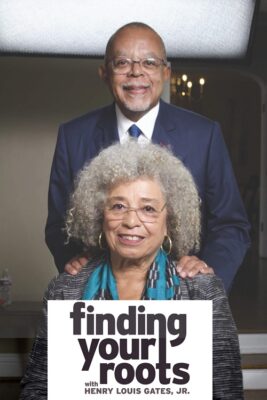 The show traces the unique DNA signature of famous personalities back through time, and what it reveals of their story and history. As we know from these types of programmes, sometimes the results are surprising, but in Davis’s case, the results were a personal shock of seismic proportions. She learned she had white ancestors who came to America aboard the Mayflower; and if having inconvenient ancestors attached to her life’s narrative and drive was not enough, it got a lot worse. She already knew she was the descendant of slaves, and this had always been her badge of honour. But then came the bombshell that rocked her world: She was also the descendant of slaveholders.
After receiving the news, she said: “I always imagined my ancestors as the people who were enslaved, my mind and my heart are swirling with all of these contradictory emotions.” She admitted that it was “all a little too much for her to deal with right now” but at the same time it made her “even more connected to struggling for a better world.”
As we celebrate St. Patrick’s Day once more, we are in a sense, tracing our own unique DNA signature and celebrating what we believe it says about us, and what our roots are. But no doubts about it, what it does reveal, challenges the modern absolutes of so many. For better or worse, Christianity is in our DNA. Our rich Christian heritage with its history, impact, culture, art, buildings, and people is part of our story, engrained within our very being. But that fact is now seemingly an embarrassing gene of seismic proportions for some.
Our once badge of honour, of being a people converted to Christ by a former slave, is not the narrative now wanted, and it is being replaced with a reclaiming of a more ancient, Celtic heritage.
Celtic culture and paganism, which lead us nowhere, fits better with modern absolutes and ways, than does the challenging radiance of our beautiful Christianity which give us always sure direction, truth, and hope.
St. Patrick’s Day is now a frenetic mix of promotion, tourism, and celebration, with a comical nod to our once rich religious inheritance. St. Patrick, that once strong symbol of our heritage, culture and faith has become somewhat of a leprechaun sideshow – an object of amusement more than admiration – reflecting the attitudes of some to our Catholic faith and history.
Our country, this land of Patrick’s initial captivity, has become the land of our captivity in faith. Increasingly, religious principles and values are constantly criticised and rejected. Yet, nothing of any substance has managed to replace them. There has been contenders, but they were out of their depth.
However, here today, we say something different.
Today, and always, we do not shy away from our heritage and story. We take pride and joy in who we are, and where we have come from. We hail from a people who rejected the darkness of paganism and embraced the Light of Christ; and who revered the people who brought us that light. We are God’s people, we are a Christian people, and we proclaim and live this reality everyday.
Patrick’s own story brings home how the Lord works powerfully in dispelling darkness and leading people to see clearly. St. Patrick reminds us that when we seem to be losing much, God graces us all the more.
Patrick wrote in his confessions: ‘I cannot be silent… about the great benefits and graces that the Lord saw fit to confer on me in the land of my captivity.’
Friends, the struggle for faith, the struggle for light continues. It is a struggle for Christ but a struggle worth fighting because only Christ can make better our lives and our world. Christ changed Patrick. Patrick changed us through Christ.
May, nothing ever change us or lead us away from that beautiful light and heritage we share as God’s people.
Fr. Richard