

Gospel & Reflection
Gospel & Reflection for the Third Sunday of Easter.
Luke
24:13-35
That very day, the first day of the week,
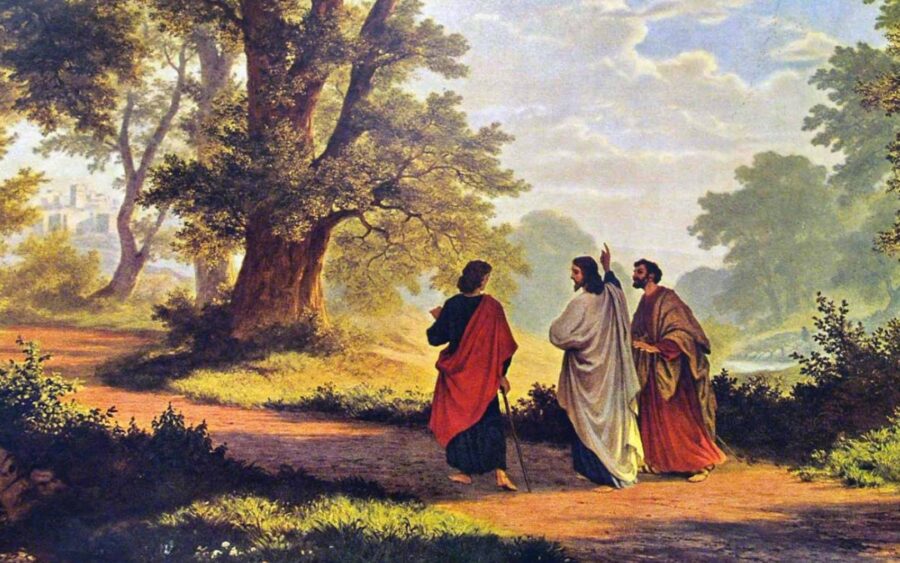
two of Jesus’ disciples were going
to a village seven miles from Jerusalem called Emmaus,
and they were conversing about all the things that had occurred.
And it happened that while they were conversing and debating,
Jesus himself drew near and walked with them,
but their eyes were prevented from recognizing him.
He asked them,
“What are you discussing as you walk along?”
They stopped, looking downcast.
One of them, named Cleopas, said to him in reply,
“Are you the only visitor to Jerusalem
who does not know of the things
that have taken place there in these days?”
And he replied to them, “What sort of things?”
They said to him,
“The things that happened to Jesus the Nazarene,
who was a prophet mighty in deed and word
before God and all the people,
how our chief priests and rulers both handed him over
to a sentence of death and crucified him.
But we were hoping that he would be the one to redeem Israel;
and besides all this,
it is now the third day since this took place.
Some women from our group, however, have astounded us:
they were at the tomb early in the morning
and did not find his body;
they came back and reported
that they had indeed seen a vision of angels
who announced that he was alive.
Then some of those with us went to the tomb
and found things just as the women had described,
but him they did not see.”
And he said to them, “Oh, how foolish you are!
How slow of heart to believe all that the prophets spoke!
Was it not necessary that the Christ should suffer these things
and enter into his glory?”
Then beginning with Moses and all the prophets,
he interpreted to them what referred to him
in all the Scriptures.
As they approached the village to which they were going,
he gave the impression that he was going on farther.
But they urged him, “Stay with us,
for it is nearly evening and the day is almost over.”
So he went in to stay with them.
And it happened that, while he was with them at table,
he took bread, said the blessing,
broke it, and gave it to them.
With that their eyes were opened and they recognized him,
but he vanished from their sight.
Then they said to each other,
“Were not our hearts burning within us
while he spoke to us on the way and opened the Scriptures to us?”
So they set out at once and returned to Jerusalem
where they found gathered together
the eleven and those with them who were saying,
“The Lord has truly been raised and has appeared to Simon!”
Then the two recounted
what had taken place on the way
and how he was made known to them in the breaking of bread.
Reflection
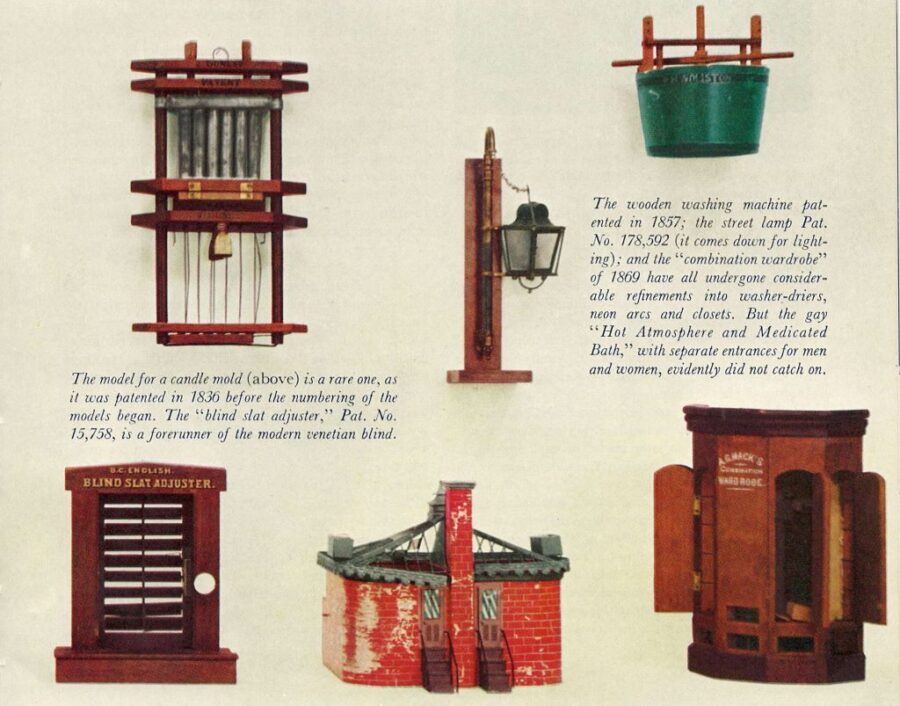
Friends, one hundred years ago in Washington D.C., what has been described as the “world’s weirdest auction” took place. This auction involved the disposal of 150,000 patented blueprints and models of unwanted or unsuccessful inventions. Among the unusual items up for auction were the blueprints for:
• An Anti-Snoring Trumpet – which would awaken a snorer without disturbing neighbours.
• A Self-Warming Foot Tube – A pipe travelling from a person’s mouth to their feet to keep them warm, by using their breath as they slept.
While sounding ridiculous, maybe, to us now, all these items were more than just unwanted contraptions. They represented 150,000 broken and shattered dreams. All those inventions belonged to people who no doubt put their heart and soul, imagination, and resources into them, believing that they had created something unique, special, and needed for the world. They probably dreamed of fame, fortune, accolades, and admiration, but lived only to see it all end in obscurity and mediocrity.
In our Gospel for this Sunday, we listen to the well-known story of the disciples on the Road to Emmaus. These two followers know only too well what broken dreams are about. They are overcome by life, circumstance and outcome. Their lives are in tatters. Everything that they had come to believe in was gone, the One they trusted and had faith in was dead. Some of it was their own fault, they lacked courage and faith when it was needed most, but much had been inflicted on them too. So, everything that promised them a beautiful future, that gave them hopeful dreams, what promised them fulfillment, it all laid crushed beneath the Cross and the Tomb, or so they thought.
As they ponder their broken dreams, regrets and grief, as they think over all that they feel is lost, Jesus Himself comes among them. They talk to Him not recognizing Him, and even say to Him: “You must be the only person…who does not know the things that have been happening…” The irony is their fellow traveler is the only One who truly does know all that has happened. But He then helps them to properly understand what has happened, both to Him, them, and for the world. Later, He opens their eyes to His identity at the Eucharistic table, through which their grief is healed and their dreams and hopes restored.
Friends, what do we do when the bottom falls out of life? What do we do when our life seems to fall apart? It may have been circumstances beyond our control; it could be something that we ourselves said or did; it could be the fault of another, but what do we do when everything falls apart, when our dreams are broken?
Our Gospel today is a beautiful reminder of the hope that we always have in Christ and in our faith. Just because something is broken, that does not mean it is a failure, or that we are a failure. Our salvation story is one where only with an ending can something or someone be born eternally. Throughout His ministry Jesus both hinted and spoke explicitly about this. “Unless a grain of wheat falls to the ground and dies, it remains only a single grain. But if it dies, it produces a rich harvest.”
So often people feel that God is only present when everything is unbroken, when things are good, successful, and happy – where our prayers are answered and our dreams intact. But God is also present and is more familiar in the broken, when things fall apart. Not everything works out as we hope. Not all dreams come true. Life does not always go as we planned. But while much can go wrong and many things can be broken, God’s promises never are. He remains faithful and true. Christ made Himself known to the disciples in the ‘breaking’ of Bread and through that which was broken, all was made good again.
So, let us approach the Lord always and tell Him what we hope for, but let us never forget that in all that might happen, good and bad, our God deals in Resurrection. He can repair what is broken, He can restore what is lost, He brings to life what is dead. We trust in His presence as we walk the road of life and faith, and we recognise Him in the breaking of bread, where all is made good and where we properly understand all that is happening to us both good and bad.
Fr. Richard