

Gospel & Reflection
Gospel & Reflection for the Sixth Sunday of Easter.
John 14:15-21
Jesus said to his disciples:
“If you love me, you will keep my commandments.
And I will ask the Father,
and he will give you another Advocate to be with you always,
the Spirit of truth, whom the world cannot accept,
because it neither sees nor knows him.
But you know him, because he remains with you,
and will be in you.
I will not leave you orphans; I will come to you.
In a little while the world will no longer see me,
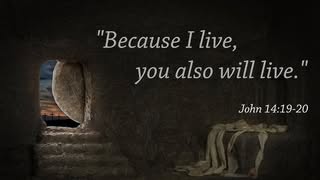
but you will see me, because I live and you will live.
On that day you will realize that I am in my Father
and you are in me and I in you.
Whoever has my commandments and observes them
is the one who loves me.
And whoever loves me will be loved by my Father,
and I will love him and reveal myself to him.”
Reflection
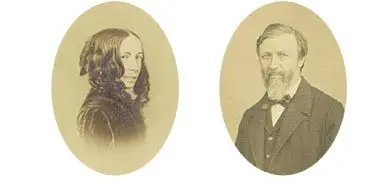
One of England’s most celebrated Victorian poets was a woman called Elizabeth Barrett. In her lifetime, her poetry was popular not just in her native England but also in America. In recent years her work has received renewed attention and is read, studied, and highly regarded. However, her life’s story and particularly the story of the love of her life, is a true tale from which the the best of romantic novels and poems could only hope to be made of.
From her teenage years, Elizabeth suffered from severe and debilitating illness. She was so sick and isolated, that as the years went on, she became a prisoner of her own frailty, constantly weak and exhausted, not even been able to raise her head from her pillow. One day, however, she was visited by another poet and playwright, a man by the name of Robert Browning. Browning had come to meet the author of the poetry that had inspired and delighted him so much.
They had an immediate connection and after his first visit, an amazing thing happened. He left Elizabeth with such joy and happiness that she was able to lift her head from the pillow. After his second visit, she was able to sit up in bed. Then a secret correspondence and courtship began because of Elizabeth’s’ controlling and disapproving father. After Browning’s third visit, they eloped and were married in Italy, where they settled and raised a family, living happily until Elizabeth’s death at the age of 55 in 1861. Today she is known as Elizabeth Barrett Browning, the great 19th century English love poet.
This all came about because Browning loved her. In loving her and wanting the best for her, he did not just help her to get better, he gave her a reason to live. His love was the “Spirit of Truth” that she needed because it contradicted what she had come to believe about herself and her life – that she was destined for loneliness and darkness. Browning’s love and encouragement filled her with hope and brightness. In one of her sonnets, she revealed her love by writing:
‘How do I love thee? Let me count the ways… I love thee with the breath, smiles, tears, of all my life; and, if God choose, I shall but love thee better after death.’
Friends, such is the power of love! Love has the power to heal, the power to make well. It has the power to lift drooping heads, to fill empty hearts, to unite and create. In short, love has power beyond our imagining.
In our Gospel for this weekend, the most powerful and transforming love of all, is promised to each and every one of us. Jesus offers a love that is much more than some passing, nice feeling, but which is a permanent indwelling of His very self. He promises to make a home within us, and with His love, will provide a supernatural support for us. So, through the Holy Spirit, we are never alone or orphaned. Christ is no longer just watching over us from Heaven. He is living within us.
His “Spirit of Truth” will always then be the ultimate contradiction to everything that tries to keep our own heads down, that tries to stop us from lifting ourselves up, that tries to stop our hearts from being encouraged. Jesus gives us a reason to live and that reason is love – to love and to be loved.
St. Thomas Aquinas defined love as ‘willing the good of another’. This is love, not as sentiment but as sacrifice; going out of our way in word, thought and deed to prove our love. Christ proved His love in His care, instruction, and help of people. He sealed His love on the Cross. We are asked to do the same. In all of what we say and do, we are asked to share the love that Christ has for us and which we hopefully know in our lives, with others.
So, with every breath, smile, and tear of our lives, let us count the ways in which we can show God and each other, how much we love them, in this world and the next.
Fr. Richard