

Gospel & Reflection for the Second Sunday in Ordinary Time.
John 2:1-11
There was a wedding at Cana in Galilee. The mother of Jesus was there, and Jesus and his disciples had also been invited. When they ran out of wine, since the wine provided for the wedding was all finished, the mother of Jesus said to him, ‘They have no wine.’ Jesus said ‘Woman, why turn to me? My hour has not come yet.’ His mother said to the servants, ‘Do whatever he tells you.’ There were six stone water jars standing there, meant for the ablutions that are customary among the Jews: each could hold twenty or thirty gallons. Jesus said to the servants, ‘Fill the jars with water’, and they filled them to the brim. ‘Draw some out now’ he told them ‘and take it to the steward.’ They did this; the steward tasted the water, and it had turned into wine. Having no idea where it came from – only the servants who had drawn the water knew – the steward called the bridegroom and said, ‘People generally serve the best wine first, and keep the cheaper sort till the guests have had plenty to drink; but you have kept the best wine till now.’
This was the first of the signs given by Jesus: it was given at Cana in Galilee. He let his glory be seen, and his disciples believed in him.
Reflection
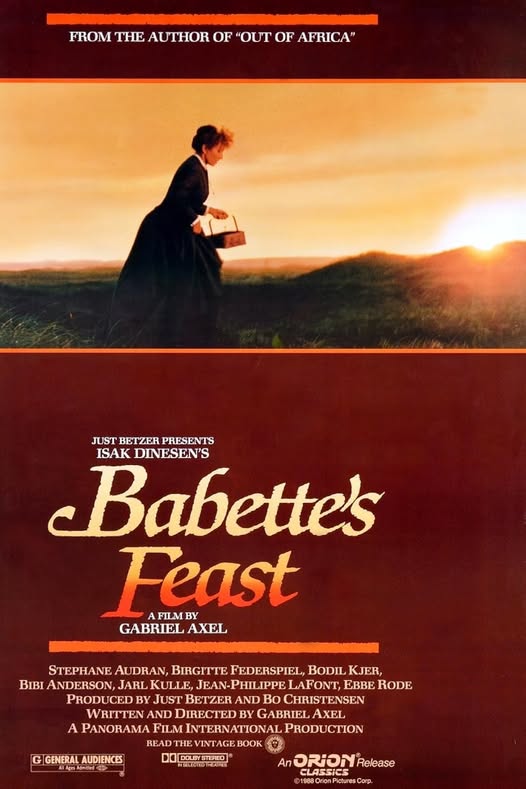
Friends, in his rare moments of relaxation, Pope Francis enjoys looking at soccer, especially if his hometown club of San Lorenzo are playing, and he also enjoys a good film. The 1987 Oscar winning Danish film, ‘Babette’s Feast’, is his favourite movie. He has mentioned it numerous times throughout his papacy and even in one of his encyclicals – ‘The joy of love.’
‘Babette’s Feast’ tells the tale of two elderly sisters living in a small coastal village. The community was founded by their late father, an austere and strict Protestant Minister, but with the passing of years, the number in the congregation has become small, elderly, and joyless. Not only severe in faith, the congregation is constantly arguing.
A woman by the name of Babette Hersant knocks on the sister’s door. She is fleeing the revolution in Paris and has been sent to the sisters by an old acquaintance, who recommends Babette as a housekeeper. The sisters cannot afford to employ her, but she begs to work for free. Babette serves as their cook for the next fourteen years, producing improved versions of their bland meals and gains their respect, and that of the other locals in many ways.
One day, Babette wins the Paris lottery and receives 10,000 francs. After her win, instead of returning home to Paris, she decides to prepare a banquet for the sisters and their small congregation on the occasion of their late father’s hundredth birthday. More than just a feast, the meal becomes an outpouring of Babette’s appreciation, and an act of self-sacrifice. She spends all her winnings on the extravagant meal, preparing a supper that changes the guests in unexpected and mysterious ways. Babette’s gift and skill makes for a joyous celebration.
There is reminiscence of people once loved and missed, spirits are lifted, bridges rebuilt, squabbles settled, and friendships restored; and a mystical spirit settles over the table. In the end, Babette declares that she will stay with the community, and one of the sisters, now transformed personally and spiritually by all that has happened says: ” In paradise you will be the great artist God meant you to be. Oh, how you will enchant the angels!”
‘Babette’s Feast’ has strong echoes of many Christian themes – meals, celebration, and sacrifice. In short, it is a film full of Eucharistic symbolism. In the scriptures, every reference to do with meals and celebration are remarkable occasions where much is revealed, a lot changes, and where lives are transformed for the better.
The story of the Wedding Feast of Cana is one such transformative occasion. It is very ordinary in some ways, just another wedding, but something extraordinary happens. There is a revelation, and what was in danger of becoming dull and disheartening becomes jubilant and memorable. The scale of the miracle is stunning. On the orders of Jesus, in response to his mother’s request, more than enough water is changed into wine of the highest quality.
This abundance is a sign of who Jesus really is, and of the overflowing new life, joy, and hope that He brings with Him. This lavishness though, we must remember, is still Christ’s gift to us today, and always. Through our celebration of the Eucharistic meal, Christ pours out Himself to us and offers us His presence, love and hope. There never should be anything dull, tasteless, or hopeless about our faith and how we celebrate it. Here, we should always be, and here we should always feel that we belong. At His table, our spirits should be lifted, burnt bridges built again, arguments settled, love renewed and friendships restored.
Here, let us find what we need to enchant the angels by becoming who God calls us to be. God is generous beyond all our imaging, and He is so for the betterment of our lives, our faith, and of our community. So, may the Lord’s abundant love and hope overflow in our lives, our Church, and our Parish, and help us to rejoice always in His love and in His hope as we gather around His table.
Fr. Richard