

Gospel & Reflection for the Twenty-Second Sunday in Ordinary Time.
Mark 7:1‐8,14‐15,21‐23
The Pharisees and some of the scribes who had come from Jerusalem gathered round Jesus, and they noticed that some of his disciples were eating with unclean hands, that is, without washing them. For the Pharisees, and the Jews in general, follow the tradition of the elders and never eat without washing their arms as far as the elbow; and on returning from the market place they never eat without first sprinkling themselves. There are also many other observances which have been handed down to them concerning the washing of cups and pots and bronze dishes. So these Pharisees and scribes asked him, ‘Why do your disciples not respect the tradition of the elders but eat their food with unclean hands?’ He answered, ‘It was of you hypocrites that Isaiah so rightly prophesied in this passage of scripture:
This people honours me only with lip‐service,
while their hearts are far from me.
The worship they offer me is worthless,
the doctrines they teach are only human regulations.
You put aside the commandment of God to cling to human traditions.’ He called the people to him again and said, ‘Listen to me, all of you, and understand. Nothing that goes into a man from outside can make him unclean; it is the things that come out of a man that make him unclean. For it is from within, from men’s hearts, that evil intentions emerge: fornication, theft, murder, adultery, avarice, malice, deceit, indecency, envy, slander, pride, folly. All these evil things come from within and make a man unclean.’
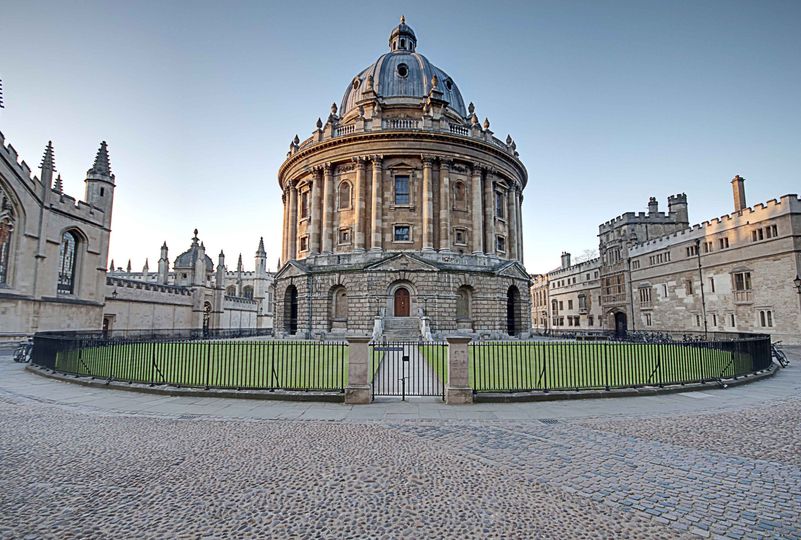
Friends, Radcliffe Camera is an elegant and beautiful library located on the grounds of Oxford University in England. It is nearly four hundred years old. It is a building circular in shape, topped by a great dome, and is beautiful inside and out. A well-kept, manicured lawn surrounds it. This lawn was for some centuries protected by railings but during World War II, the British Government ordered that all ironwork was to be dismantled and melted down for armaments. The railings around Radcliffe Camera would have no exemption.
Very quickly though, the newly open space around the library became a place for people to lounge about, drink and other noisy behaviour. Those in the library found that the noise was too much, and they could not do their work in peace. There was an attempt with signage and by-laws to care for the grounds and keep respect for the purpose of the library, but nothing worked. Finally, in the 1980’s, the University decided that the railings had to go back! Since then, the grass and the building are again looking beautiful and immaculate.
In an ideal world, we would not need railings, rules, or laws of any type. But without them, all that we consider important, beautiful and sacred can be ignored and trampled on. The simple truth is, the more we revere something and want to protect it, the more we have to surround it with laws to shield it; hoping that people will realise its value. This is particularly true of faith. We love and revere God and we want to follow Him as best as we can. To make this possible, we subscribe to certain values, we try to live up to certain commands, we respect and follow God’s law as a dependable guide through life.
We see these laws, commandments, and doctrines as supporting us in our relationship with God, helping us to respect Him, and supporting us in our efforts to be the best disciples that we can be. But they also bring our lives into focus regarding others and how God expects us to relate to them. Religious laws and expectations free us, open us to having a sincere and inspiring relationships with God and people.
The issue of laws, but the clash between obeying or disobeying them, is what our readings this weekend are about.
In the first reading, Moses urges the people to obey the law and to live by it. Doing so, he promises, will bring prosperity, wisdom, and prudence. In our Gospel, Jesus clashes with the Pharisees who prided themselves on keeping the law. But while they obeyed the law to perfection, their hearts were far from God. They used God’s law to coerce, frighten and control. This drained God’s law of its ability to inspire those who followed it to be loving, respectful and joyful as God wanted. The Pharisees lack of witness but constant demands about even insignificant things, only sowed disharmony among the people; the opposite of what God desired and intended.
The struggle to present Christian religious law as something good and essential, and its ability to inspire the common good, continues to this day.
There is an intense modern crusade underway to empty society of morality, Church, God, and His laws. For a lot of people, religion, religious values, religious people, they are a hindrance to those who want what they describe as to ‘live their best life now’. For them, faith seems to be a threat to human flourishing. The ‘best life’ is one seemingly without limits – no laws, no railings, nothing to be held sacred. It is about people deciding everything for themselves, steering their own way, masters of their own destiny, despite the cost. Such a life can seem very appealing but in reality, is nothing but selfishness personified. It is a life that does not inspire or encourage, and certainly is not mindful or considerate of others.
Friends, God’s law is not meant to be a killjoy in our life or a box just to be ticked. Properly understood and practiced, it should speak to and gladden our heart; and then shine forth in our love, our consideration, and our hope.
Accepting and living God’s law is not about being burdened or having to be unhappy. It is about following a path to true freedom and boundless joy where we live in harmony with ourselves, God and others. Surely this, is living our best life now.
Fr. Richard