
Gospel & Reflection for the Fifteenth Sunday in Ordinary Time.
Luke 10:25‐37
There was a lawyer who, to disconcert Jesus, stood up and said to him, ‘Master, what must I do to inherit eternal life?’ He said to him, ‘What is written in the Law? What do you read there?’ He replied, ‘You must love the Lord your God with all your heart, with all your soul, with all your strength, and with all your mind, and your neighbour as yourself.’ ‘You have answered right,’ said Jesus ‘do this and life is yours.’
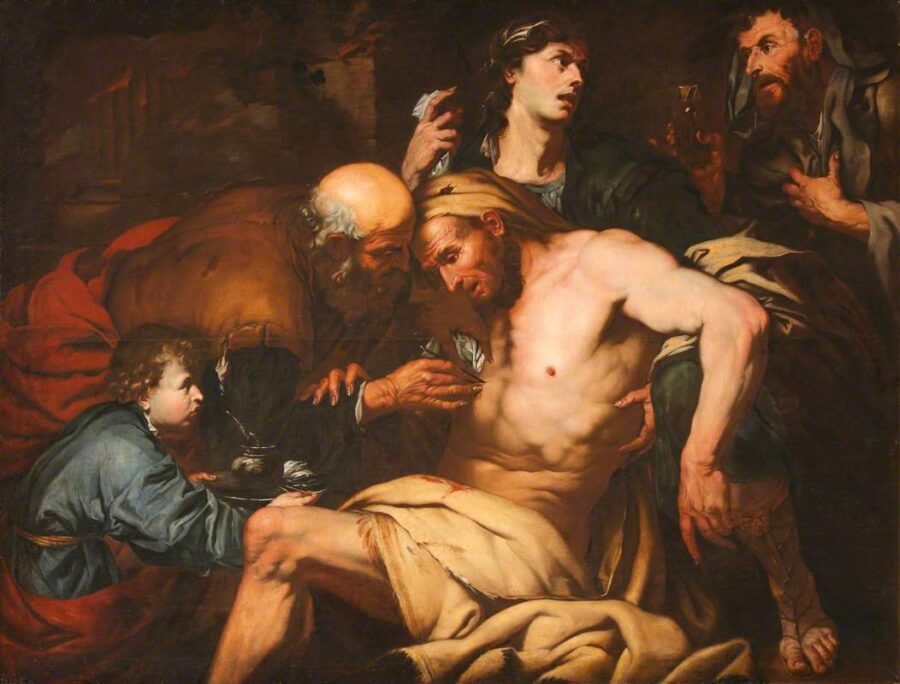
But the man was anxious to justify himself and said to Jesus, ‘And who is my neighbour?’ Jesus replied, ‘A man was once on his way down from Jerusalem to Jericho and fell into the hands of brigands; they took all he had, beat him and then made off, leaving him half dead. Now a priest happened to be travelling down the same road, but when he saw the man, he passed by on the other side. In the same way a Levite who came to the place saw him, and passed by on the other side. But a Samaritan traveller who came upon him was moved with compassion when he saw him. He went up and bandaged his wounds, pouring oil and wine on them. He then lifted him on to his own mount, carried him to the inn and looked after him. Next day, he took out two denarii and handed them to the innkeeper. “Look after him,” he said “and on my way back I will make good any extra expense you have.” Which of these three, do you think, proved himself a neighbour to the man who fell into the brigands‘ hands?’ ‘The one who took pity on him’ he replied. Jesus said to him, ‘Go, and do the same yourself.’
Reflection
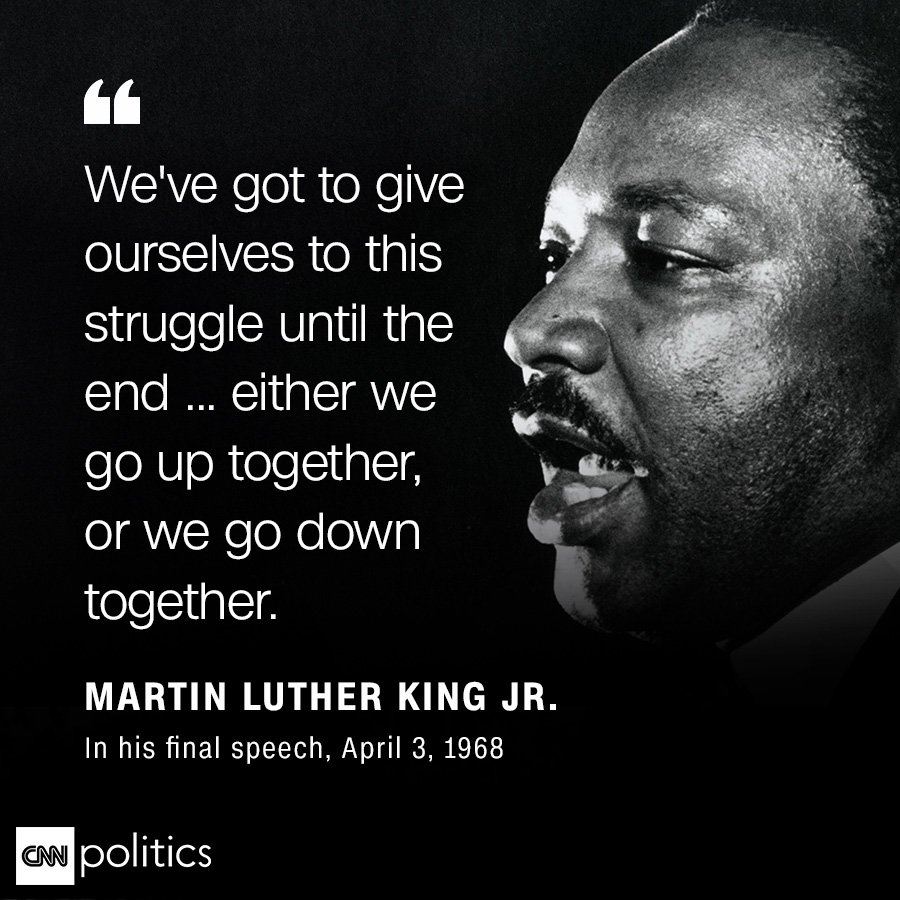
Friends, on April 3rd 1968, the night before he was assassinated, Dr. Martin Luther King addressed a rally supporting a call for better pay and conditions for striking workers in Memphis, Tennessee. During his speech that evening, his now famous ‘I’ve been to the mountain top’ speech, he told his own version of the Good Samaritan, the parable at the centre of our Gospel for this weekend.
Martin Luther King looked at this story and he imagined what was going through the mind of the two people that walked passed the victim. He said that they were thinking with fear: “What will happen to me if I help this person? Maybe the muggers will come back? Maybe this person is faking it and will attack me if I go to help them? So, they were thinking of themselves. The Good Samaritan however, (he said) was not thinking of what would happen to him if he helped this person, instead he was thinking, what will happen to this person if I do nothing?”
Dr. King called this Christian attitude an example of ‘dangerous unselfishness’ – an example of being willing to take the risk to help and love another.
‘Dangerous unselfishness’ most certainly is what our Gospel today is all about. It is about a love, a care, a consideration for others that is not boxed in, not bordered, not conditional but open and freely given.
In the Jewish world of Jesus, it would have been unusual to put the two words ‘good’ and ‘Samaritan’ together. There was a long standing enmity between Jews and Samaritans. Earlier in the Gospel for example, Jesus was refused hospitality by a Samaritan village because He was seen as a Jew on His way to Jerusalem. So, this parable which Jesus purposely tells, would have been very provocative in its original setting.
The lawyer who approaches Jesus would have had a very clear and strict understanding of his duty to love and care for others. According to Jewish scripture, law and practice, a person was called to love God, their family and the people of their nation. Outside of those, they were not bound to care for anyone else. However, Jesus takes this narrow understanding and changes it completely.
No longer will love of God and our neighbour be so limited and constrained. Jesus sets it free; He breaks the chains of indifference and prejudice holding it back.
This challenge to love unconditionally, to love even our perceived enemies packed such a punch, that in responding to the Lord’s question at the end, the lawyer can not bring himself to mention the name of his considered enemy. He does not say, he can’t bring himself even to say the word ‘Samaritan’; instead he answers by saying “The one who took pity on him.” The lawyer it seems, had a long way to go before he could practice dangerous unselfishness!
Like the Good Samaritan, Martin Luther King Jr. practiced ‘dangerous unselfishness’. He knew his life would be at risk taking up the Civil Rights movement. But he knew that this was what he needed to do, what he had to do, what God was asking him to do. He was being called to unite friend and foe, to unite people in a simple recognition of human dignity and social justice by nonviolent resistance.
Friends, we too are asked to follow such an example, the example that the Lord sets before us all today, an example followed by Martin Luther King and his like. When there is a need, we should not be thinking about what will happen if I do something, our thought should be what will happen if I do nothing?
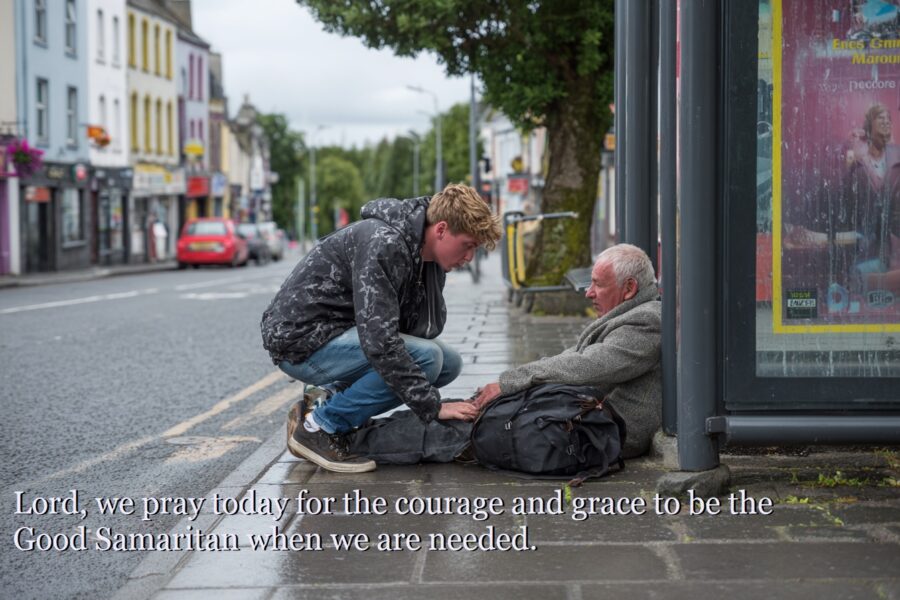
Friends, we pray today for the courage and grace to follow the Christian example of the Good Samaritan – the courage and example to practice dangerous unselfishness.
Fr. Richard