
Gospel & Reflection for the Twenty Seventh Sunday in Ordinary Time
Luke 17:5‐10
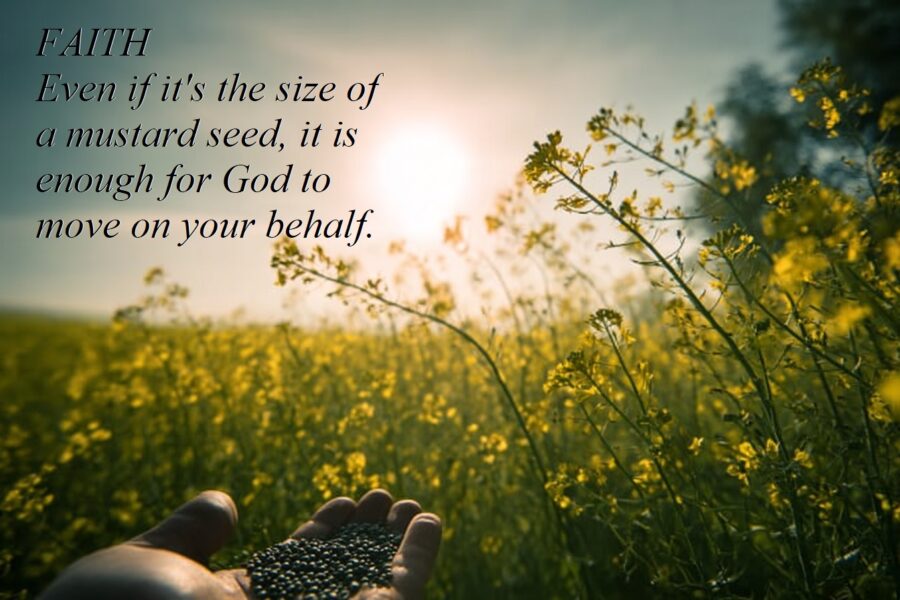
The apostles said to the Lord, ‘Increase our faith.’ The Lord replied, ‘Were your faith the size of a mustard seed you could say to this mulberry tree, “Be uprooted and planted in the sea,” and it would obey you.
‘Which of you, with a servant ploughing or minding sheep, would say to him when he returned from the fields, “Come and have your meal immediately”? Would he not be more likely to say, “Get my supper laid; make yourself tidy and wait on me while I eat and drink. You can eat and drink yourself afterwards”? Must he be grateful to the servant for doing what he was told? So with you: when you have done all you have been told to do, say, “We are merely servants: we have done no more than our duty.”
Reflection
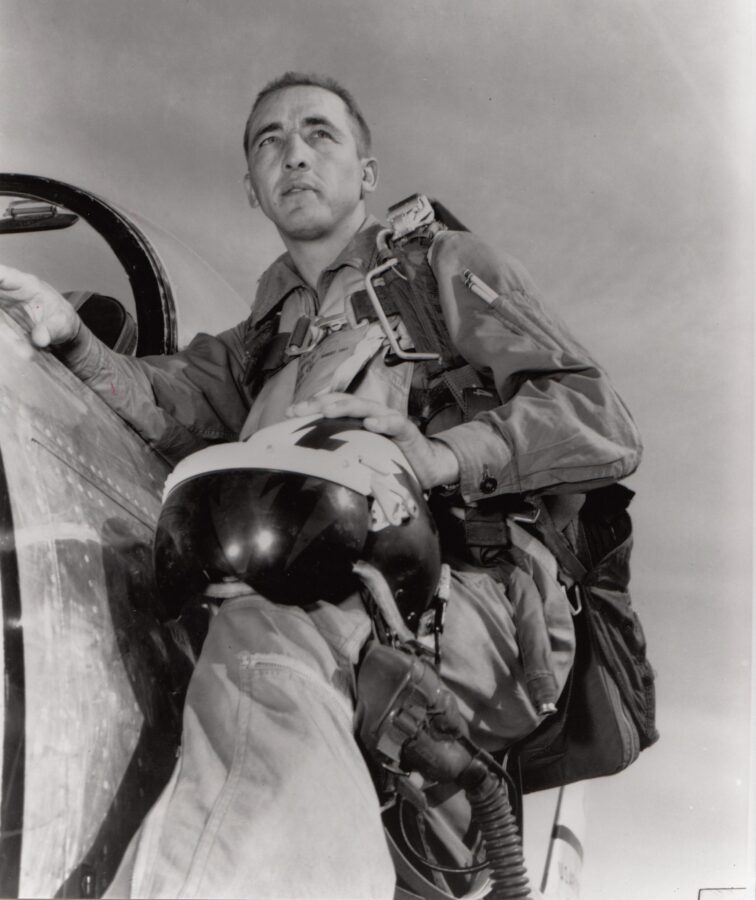
Friends, General James ‘Robbi’ Risner began his naval career as a fighter pilot in the United States Air Force. In September of 1965, his plane was shot down during a mission over Vietnam and some days later he was captured, becoming a prisoner of war. Along with many comrades, he was to spend the next seven years incarcerated in two vicious prisons in Hanoi – the brutally infamous ‘Hanoi Hilton’ and another, notoriously named ‘The Zoo’ – before his release during ‘Operation Homecoming’ in 1973.
Risner spent three of those seven years in solitary confinement and was frequently tortured and beaten. His screams and those of other prisoners constantly echoed throughout the prison, chilling the blood of all who heard them. His filthy, rat-infested cell offered no bed, no chair, no table, and no way out. All it presented was misery.
How does one survive such an ordeal? What is one to do?
In his autobiography, The Passing of the Night: My Seven Years as a Prisoner of the North Vietnamese, Risner attributes his faith in God and prayer as being instrumental to his survival. He wrote: ‘To make it, I prayed by the hour. I did not ask God to take me out of it. I prayed he would give me strength to endure it. When it would get so bad that I did not think I could stand it, I would ask God to ease it and somehow, I would make it. He kept me.’
So, with all that he was going through, with everything that he was coping with, Risner made a relentless commitment to praying, even for a small amount of time, every hour. That small, persistent devotion grew into a deep source of strength, determination, and endurance. It also encouraged his fellow captives. One of them, Everett Alverez, said: “We were lucky to have Risner. With Risner we had spirituality.”
It is this profound connection between a small, active faith accomplishing much, that allows our readings this weekend to speaks directly to us. The plea, which we hear of in our Gospel from the disciples: “Lord, increase our faith,” this was the Apostles asking Jesus for a spectacular, rock-moving, iron cast faith which they could rely on, and never falter with. But Jesus’ answer to them is unexpected and yet profoundly simple.
He says that if they had faith the size of a mustard seed—the smallest seed known to them—they could do and overcome anything. Jesus was telling the disciples, and now telling us, that faith is not about quantity, it is about quality.
So, if like James Risner, things get so bad for us and we feel we can’t stand it anymore or if like the prophet Habakkuk in the first reading, desperately saying “How long, Lord, am I to cry for help while you will not listen?”, a tiny seed of consistent faith has extraordinary power because it connects us, completely and totally, to the unlimited power of God. This is the kind of faith that also grew within St. Paul, himself a suffering prisoner. St. Paul not only came to know God but to rely on the power of his self-described weak faith; yet a faith which allowed him to turn his life round, to live courageously and to endure hardship, captivity, and suffering. He was truly a servant, looking after the precious gift of faith revealed to him. So also, for us all.
The power of Faith is entirely God’s power. The good things we accomplish, the strength that we find, the endurance and hope which it brings to us, these are the natural fruits of faith. What we accomplish with our faith, we do so only through the continuing presence and works of God in our lives. God keeps us.
Friends, let us pray for a mustard seed of faith today; not a faith that is bigger but one which is deeper. We ask for a faith that is persistent like the Prophet Habakkuk, sincere and bold like St. Paul, and yet expressed in the humble duty of the servant in the Gospel. May the Lord grant us the grace to simply do what we are obliged to do, trusting that even the smallest act of faith is more than enough to make all things possible.
Fr. Richard