
Gospel & Reflection for the Fourteenth Sunday in Ordinary Time
Luke 10:1‐12,17‐20
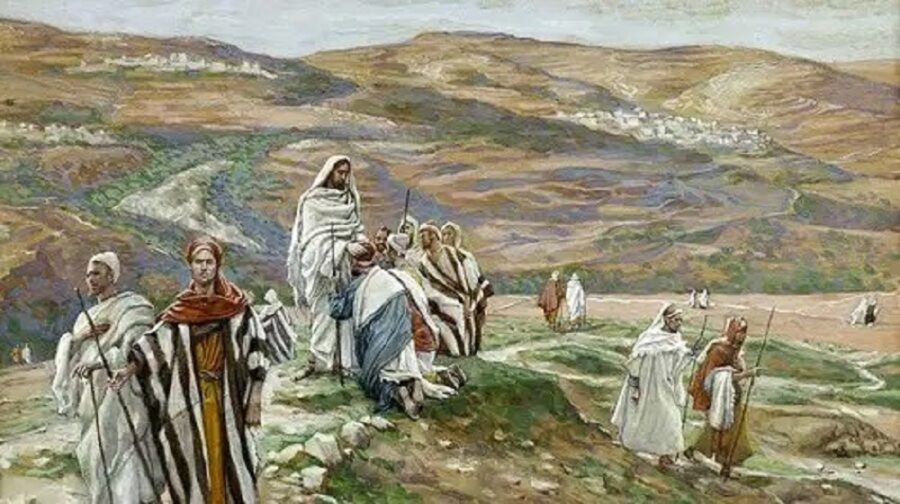
The Lord appointed seventy‐two others and sent them out ahead of him, in pairs, to all the towns and places he himself was to visit. He said to them, ‘The harvest is rich but the labourers are few, so ask the Lord of the harvest to send labourers to his harvest. Start off now, but remember, I am sending you out like lambs among wolves. Carry no purse, no haversack, no sandals. Salute no one on the road. ‘Whatever house you go into, let your first words be, “Peace to this house!” And if a man of peace lives there, your peace will go and rest on him; if not, it will come back to you. Stay in the same house, taking what food and drink they have to offer, for the labourer deserves his wages; do not move from house to house.
‘Whenever you go into a town where they make you welcome, eat what is set before you. Cure those in it who are sick, and say, “The kingdom of God is very near to you.” But whenever you enter a town and they do not make you welcome, go out into its streets and say, “We wipe off the very dust of your town that clings to our feet, and leave it with you. Yet be sure of this: the kingdom of God is very near.” I tell you, on that day it will not go as hard with Sodom as with that town.’
The seventy‐two came back rejoicing. ‘Lord,’ they said ‘even the devils submit to us when we use your name.’ He said to them, ‘I watched Satan fall like lightning from heaven. Yes, I have given you power to tread underfoot serpents and scorpions and the whole strength of the enemy; nothing shall ever hurt you. Yet do not rejoice that the spirits submit to you; rejoice rather that your names are written in heaven.’
Reflection
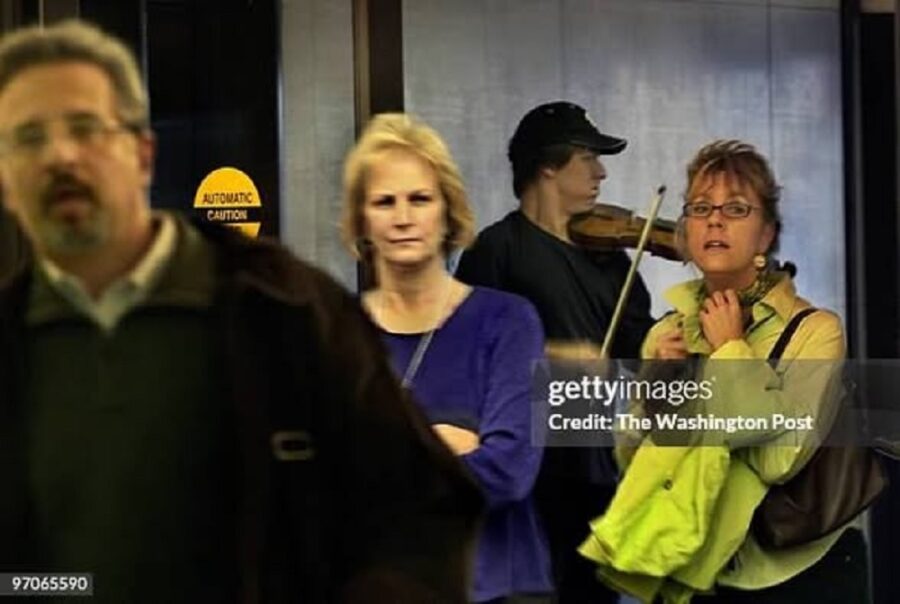
Friends, it was on a cold but bright January morning in 2007 that a young man walked into a Washington D.C. train station and began busking with his ‘violin’ for forty-five minutes. During that time, he played some of the most beautiful classical music ever composed. A few people took some time to stop and listen, most kept going; too busy, too pre-occupied, too stressed. Others gave him money, he earned $32 in tips over the three quarters of an hour that he was there but those who tipped him did so as they hurried on by.
What many people on that crisp January morning failed to recognise was, that the young violinist was Joshua Bell, one of the world’s finest classical musicians. Two days previous he had played a sold-out concert in Boston. The violin he was playing was one of the most valuable in the world, worth $3.5 and the music was the most famous pieces ever written for the violin by Johann Sabastian Bach.
However, the whole occasion was an experiment, devised by the Washington Post Newspaper to make people see that if we don’t have the time or the inclination to stop and listen to one of the most gifted musicians in the world, playing some of the finest music ever written, on a matchless instrument, how many other things, even more important, are we missing as we rush through life?
In our Gospel, we hear how the Lord appointed seventy-two disciples and sent them out to all the places He Himself was to visit. I often wonder, what was their job description? What was the purpose of them going to where the Lord Himself would eventually go to anyway? As we heard, they could take nothing with them only a reliance and trust in God, a hope in the hospitality of others, and their own experience of Christ and all that He had taught them up to that point!
On reflection, their purpose, their job was to get people ready. They had to try and make people stop and listen, to take a pause from their worried and trouble-filled lives, and not miss the most important person ever to visit their place and come into their lives in a very meaningful way, when eventually He would pass through.
They had to convince others, with nothing only their own personal conviction, experience and belief in God, that Jesus was someone worthy of their precious time and important to listen to. The seventy-two were getting people ready to welcome God, and to be changed for the better by Him, just as they themselves had been.
They were making sure that people would know exactly who it was that was coming to them and would not miss Him. That call of the first Apostles, that call to discipleship, is ongoing.
Discipleship did not start or stop with the Apostles or the seventy-two in the Gospel. Every saint and sinner and everyone else in between, is called to follow Christ. It is a call to simply be able to recognise the presence of God in our lives and the many blessings that He showers us with. It is about being prepared to have the time to stop and listen, to see and hear, to experience and acknowledge God all around us, even with the busyness of our lives.
Nothing should escape our notice – no person passing us by, no small act of kindness received, time with family and friends, any simple or important occasion – we must not take anything for granted. Every small or large blessing is proof of God, and every day we are sent out to recognise these blessings, to give thanks for them, and to share them.
Friends, one ordinary January morning, a talented musician played beautifully for all to hear but very few took the time to experience his giftedness and his music. For the past two thousand years and counting, Christ has been standing before the world, standing in all our lives, offering us everything that is beautiful, truthful, and loving. He offers us ‘Shalom’ – which we translate as ‘Peace’ but which actually means ‘a fullness of life on every level’.
Let us never fail to recognised the beauty of God in our lives, who offers us a fullness of life on every level; and through our own conviction, experience and belief in Him, may others come to recognise Him too and experience that same fullness.
Fr. Richard