Gospel & Reflection for the Third Sunday of Advent.
Matthew 11:2-11
John in his prison had heard what Christ was doing and he sent his disciples to ask him, ‘Are you the one who is to come, or have we got to wait for someone else?’ Jesus answered, ‘Go back and tell John what you hear and see; the blind see again, and the lame walk, lepers are cleansed, and the deaf hear, and the dead are raised to life and the Good News is proclaimed to the poor; and happy is the man who does not lose faith in me.’
As the messengers were leaving, Jesus began to talk to the people about John: ‘What did you go out into the wilderness to see? A reed swaying in the breeze? No? Then what did you go out to see? A man wearing fine clothes? Oh no, those who wear fine clothes are to be found in palaces. Then what did you go out for? To see a prophet? Yes, I tell you, and much more than a prophet: he is the one of whom scripture says:
‘Look, I am going to send my messenger before you;
he will prepare your way before you.
‘I tell you solemnly, of all the children born of women, a greater than John the Baptist has never been seen; yet the least in the kingdom of heaven is greater than he is.’
Reflection
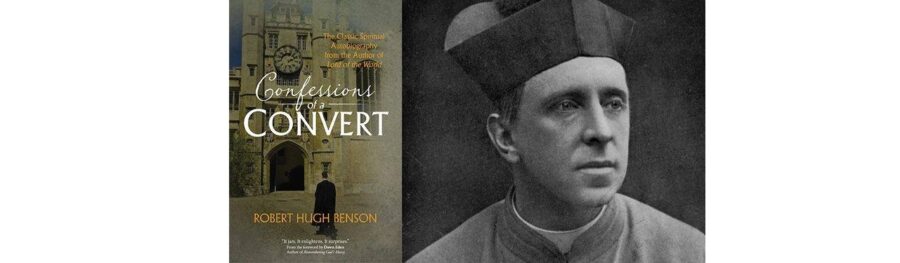
Friends, Robert Hugh Benson was an English Catholic Priest and Writer, who in October of 1919, died from pneumonia at the early age of forty-two. He wrote over two hundred books encompassing a wide variety of genres, from horror to science fiction, children’s books to devotional works. He was a remarkable person and while his life was short, it was very eventful. You see, Robert Benson was the youngest son of Edward White Benson, who was the Anglican Archbishop of Canterbury. He was educated at Eton College and then studied theology at Cambridge.
In 1895, Benson was ordained a Priest for the Church of England by his father, the then Archbishop. But when his father died suddenly the following year, Benson suffered an emotional break down and was sent to the Middle East to recuperate. While there, he began to question the status of the Church of England, and he seriously considered the doctrines of the Catholic Church. As he studied and researched, he became more uneasy with his own doctrinal position as an Anglican, and in 1903, was received into the Catholic Church and ordained a Catholic Priest in 1904.
As the son of the late Archbishop of Canterbury, his conversion and subsequent ordination caused a sensation, and he received hundreds of appalling letters condemning him. He responded though to the sender of every letter! In his spiritual autobiography, ‘Confessions of a Convert’, Benson described the many people shouting hundreds of reasons at him why he should remain an Anglican, but in the end, he said simply that he had moved from the “glare of artificial light” into the “pale daylight of cold and dreary certainty” of the truth found in Catholicism. He said: “I had a thousand difficulties, but never one doubt. I am a Catholic.”
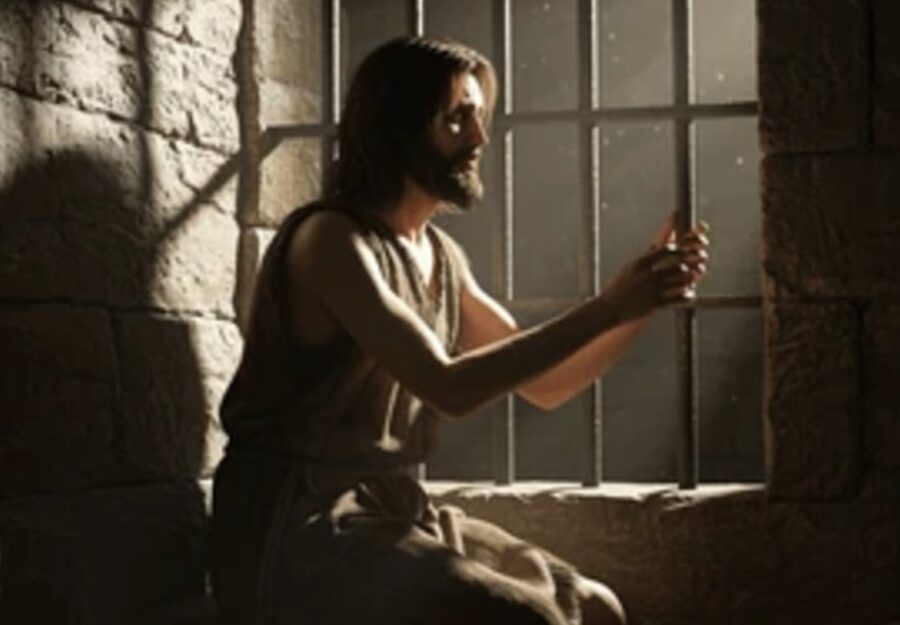
Friends, in our Gospel today, we find John the Baptist alone in his prison cell. There, he ponders on all that has happened and is to happen; and Jesus is very much on his mind. John is struggling to work out if Jesus is the Messiah or not. He has questions because Jesus’ style of ministry was vastly different to his own. John was tough and unsentimental, he preached fiercely in the wilderness, where people travelled to see and hear him.
Jesus on the other hand, went to people; He travelled to their towns and villages, and preached and helped them gently and lovingly. John, it seems, was expecting a Messiah whose ways were more like his own, but Jesus had a quite different approach altogether. For this reason, we find John under arrest, having difficulties yes, but not doubting. Like Fr. Benson, John was seeking clarity in the cold and dreariness of his situation.
Jesus reassures John that he had indeed prepared the way for the Lord. In telling John’s disciples to say that the “blind see…the lame walk…lepers are cleansed… the deaf hear…the dead are raised…and the Good News is proclaimed,” this was Jesus speaking in a way that John would have understood immediately. They are the words of the Prophet Isaiah and just as John used the words of Isaiah to speak about Jesus, now Jesus speaks these words to reassure John. It is like they are speaking in code, a code that joyfully tells John that his work is complete, that he has been a good and faithful servant.
On this Sunday for joy, Gaudete Sunday, we are being called to be simply able to acknowledge that in the everchanging realities of life and living, that somewhere within us, we will find the clarity of the peace and presence of Christ to help always. When all is great or when things are not so great; when we have good fortune or bad luck; when we are carefree or when we are weighed down by worry – in all of it, may we see Christ, may we know Christ.
May we always have an inner peace, an inner joy that nothing can alter despite what happens around us. This inner certainty of the presence of God is what shone in the life of John the Baptist, even as he sat in his prison cell. Advent is our annual opportunity to find and know this same presence. Christ is within us always and He will steer our course in all that we experience, good or bad. Let us never doubt this truth, for it gives us cause for joy today, even if we have a thousand difficulties of our own.
Fr. Richard