
Gospel & Reflection for the Thirtieth Sunday in Ordinary Time
Luke 18:9‐14
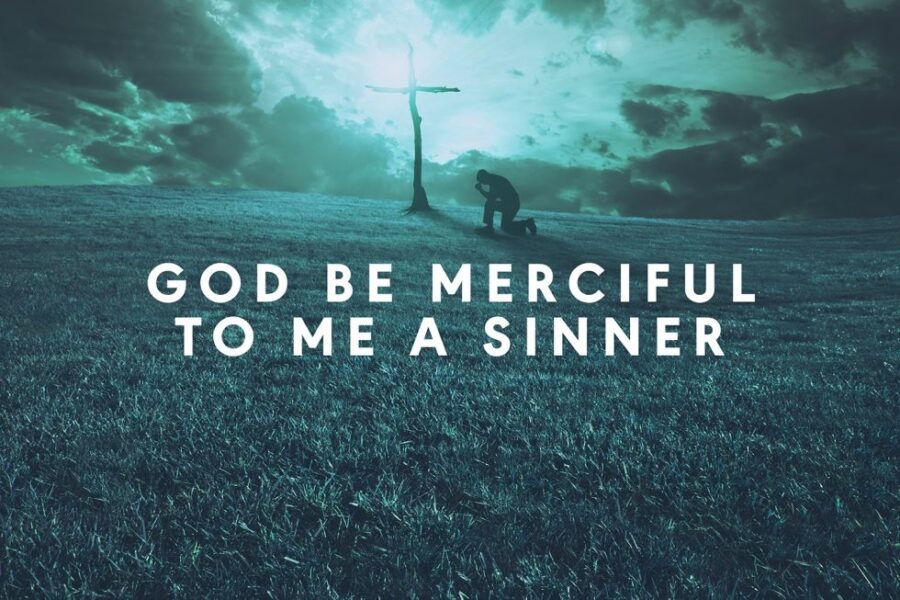
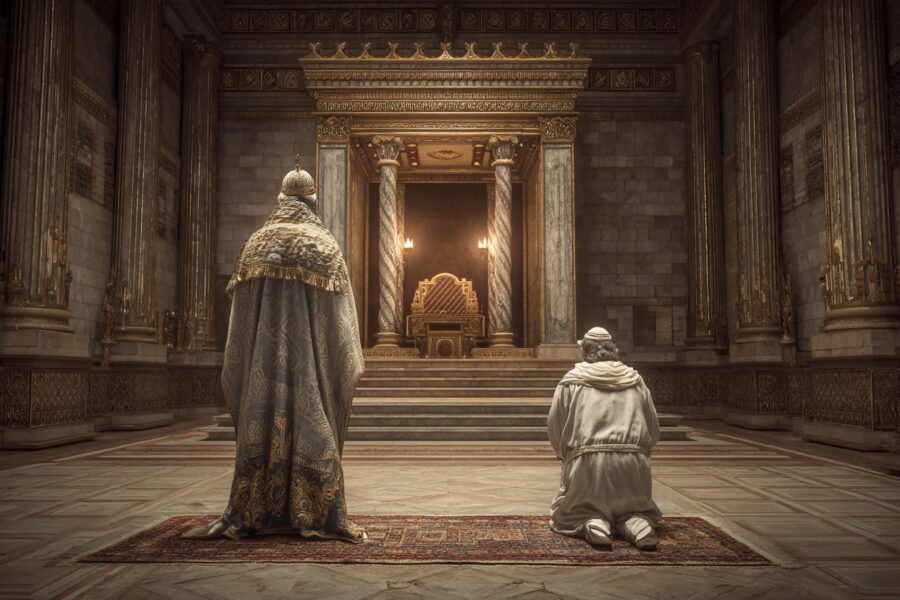
Jesus spoke the following parable to some people who prided themselves on being virtuous and despised everyone else: ‘Two men went up to the Temple to pray, one a Pharisee, the other a tax collector. The Pharisee stood there and said this prayer to himself, “I thank you, God, that I am not grasping, unjust, adulterous like the rest of mankind, and particularly that I am not like this tax collector here. I fast twice a week; I pay tithes on all I get.” The tax collector stood some distance away, not daring even to raise his eyes to heaven; but he beat his breast and said, “God, be merciful to me, a sinner.” This man, I tell you, went home again at rights with God; the other did not. For everyone who exalts himself will be humbled, but the man who humbles himself will be exalted.’
Reflection
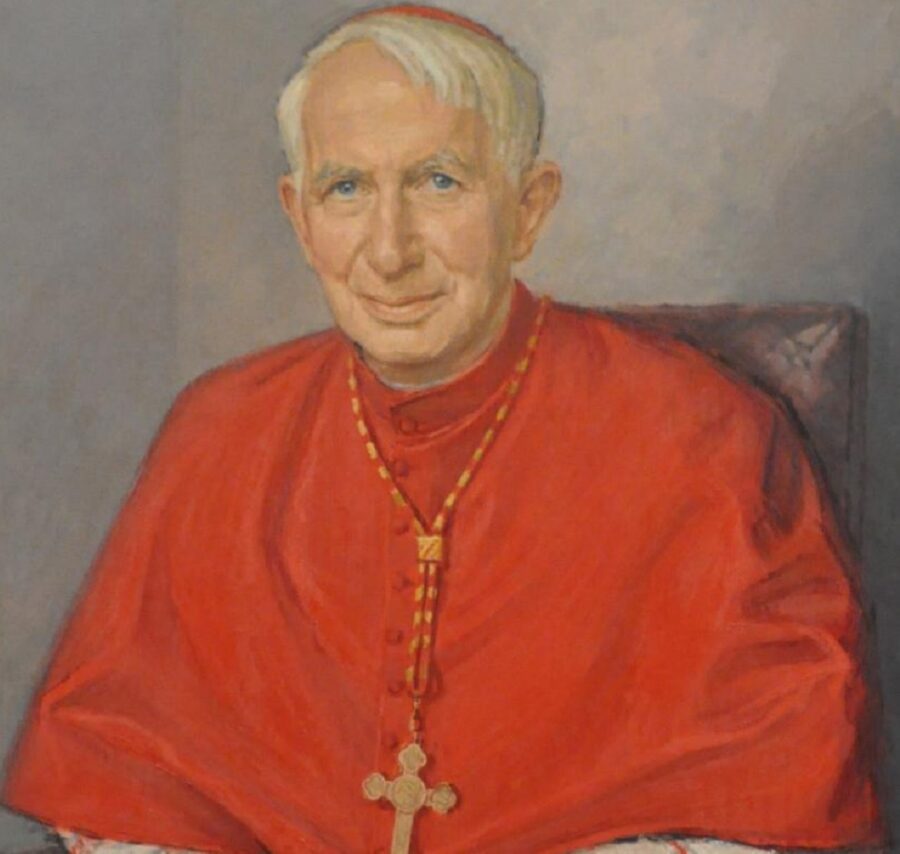
Friends, Cardinal Basil Hume was Archbishop of Westminster from 1976, until his death in 1999. Before his appointment to Westminster, he had been a Benedictine Monk for thirty-five years, serving as Abbot of Ampleforth Abbey. His greatest longing had been to return to live the simple life of a Monk at Ampleforth after his retirement. Unfortunately, illness and death robbed him of that wish.
Cardinal Hume chose the parable of the ‘Pharisee and the Tax-Collector’ as the Gospel to be read at his funeral Mass. During that Mass, the homily was preached by his friend Bishop John Crowley, who took the congregation back to 1975 when there was great media speculation about who would be the new Archbishop. One newspaper listed several frontrunners for the vacancy, including Basil Hume, and then afforded each candidate a small biography noting their advantages and disadvantages. The main shortcoming said of Basil Hume was: ‘Much to humble to make known his abilities. Could easily be missed!’
Well, the humble Abbot of Ampleforth was not overlooked, and his abilities were many, and became well known and appreciated. Two months before his death, when told of his terminal cancer, Cardinal Hume said that at first, he was tempted to say “if only…. if only I could start all over again, I would be a better Monk, a much better Abbot, a much better Bishop.” But then he said, “having thought about it, how much better to come to God and not say thank you that I was a good Monk, a good Abbot, or a good Bishop, but rather say, God be merciful to me a sinner. For if I come empty handed then I will be ready to receive God’s gift.”
Our parable for this weekend is a profound, and in many ways, an uncomfortable lesson on humility. The Pharisee stands in God’s house but prays only to himself. His bloated self-esteem has eclipsed his faith. His goodness, he does not see as a gift from God but personal feats to be boasted about. He is so focused on his own perceived virtues that he has no room for God or for compassion towards his neighbour. His uses his neighbour as a benchmark for his own superiority. In contrast, his neighbour, the tax collector knows his sinfulness, and his reliance on God. He does not dare approach the altar or even raise his eyes to heaven.
But he knows, as Basil Hume came to know, that in presenting himself to God with empty hands, asking only for mercy, that he might just then receive it. It is a powerful paradox: to be filled with God’s grace, we must first empty ourselves.
The modern world greatly misunderstands and underestimates humility. It sees humility as a weakness, as thinking little of oneself, or as making oneself into a doormat. But that is not humility. True Christian humility is not denying our gifts, it is not about feeling worthless, or allowing ourselves to trampled on. It is about seeing ourselves as we truly are – children of God who are dependent on God’s grace for everything. This dependence gives us all that we need, and it proclaims our worth and purpose to the world.
Remember that Christ was the ultimate example of the power of humility. Though God, He took upon Himself our human nature, being born in a stable. Never a pushover, He spoke strongly, passionately, and forcefully. He was never timid when confronted with hostility, never silent in the face of power, and He stood His ground always. Yet, His words, though powerful and strong, were always understanding and truthful. His actions though astonishing, were selfless and loving. The ground He walked, was holy ground, and He never stepped back. When He was lifted up from the ground, it was on a Cross, dying for all humankind. Yet, even Christ in everything depended completely on God, His Father; praying always empty handed, wanting only to do His will.
Friends, the story of the ‘Pharisee and the Tax-Collector’ is a mirror for our souls. It invites us to examine our own attitudes, especially when we pray, to see if we follow the Lord’s example of humility and are truly reliant on God for everything? Today we pray that like Cardinal Hume and the Tax-Collector, that we will always cultivate the virtue of humility in our lives, never seeing it as weakness but as the source of our greatest strength. When we are empty handed before God, it is then that we open the door for God’s grace to fill our lives.
“God, be merciful to me, a sinner.”
Fr. Richard