
Gospel & Reflection for the Twenty-Second Sunday in Ordinary Time.
Luke 14:1,7‐14
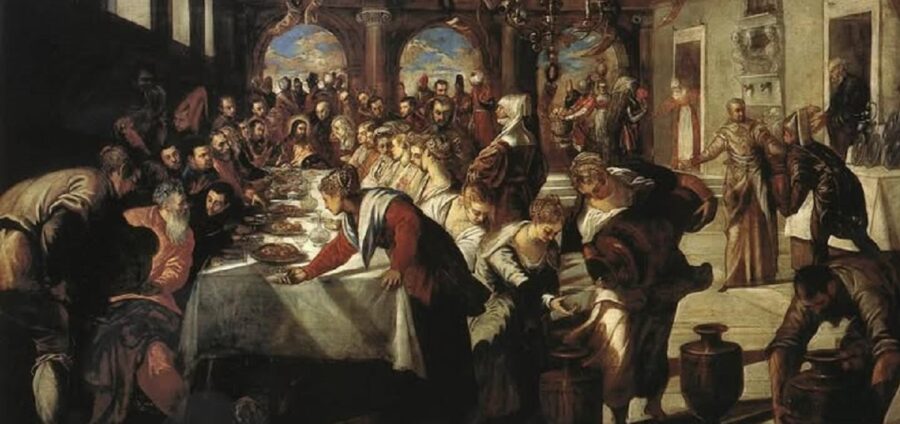
On a sabbath day Jesus had gone for a meal to the house of one of the leading Pharisees; and they watched him closely. He then told the guests a parable, because he had noticed how they picked the places of honour. He said this, ‘When someone invites you to a wedding feast, do not take your seat in the place of honour. A more distinguished person than you may have been invited, and the person who invited you both may come and say, “Give up your place to this man.” And then, to your embarrassment, you would have to go and take the lowest place. No; when you are a guest, make your way to the lowest place and sit there, so that, when your host comes, he may say, “My friend, move up higher.” In that way, everyone with you at the table will see you honoured. For everyone who exalts himself will be humbled, and the man who humbles himself will be exalted.’
Then he said to his host, ‘When you give a lunch or a dinner, do not ask your friends, brothers, relations or rich neighbours, for fear they repay your courtesy by inviting you in return. No; when you have a party, invite the poor, the crippled, the lame, the blind; that they cannot pay you back means that you are fortunate, because repayment will be made to you when the virtuous rise again.’
Reflection
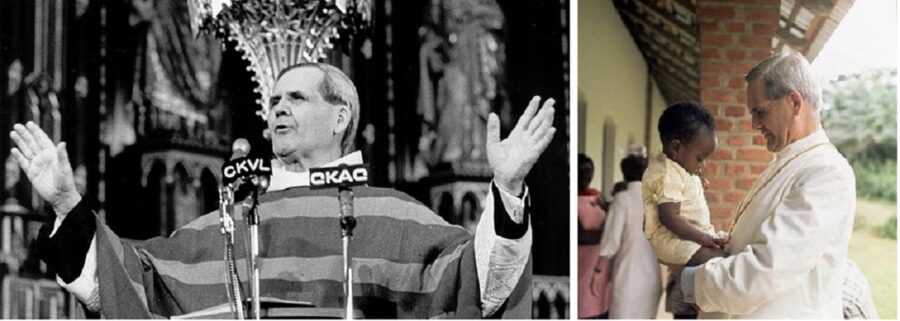
Friends, His Eminence Paul-Émile Léger was a Canadian Cardinal, serving in Montreal from 1952 until 1967. He was only forty-eight years old when appointed, one of the youngest ‘princes of the Church’ ever elevated. He became one of the most powerful clerics not just in North America but within the universal Church itself, even spoken of as a possible Papal candidate. Yet, he was known and respected as a humble man of deep convictions. During the Second Vatican Council, he was a leading and reliable voice but his gentle, yet firm resistance towards a liberal approach to many issues cost him both the loss of close friendships and the acquiring of new rivals.
However, on April 20, 1967, with Pope Paul VI’s special permission, Léger resigned from his role as a Cardinal, saying at the time: “It is individual gestures, though they are often unspectacular, which will make all the difference in the long run.” Leaving his red vestments, Crosier, Mitre, and Pallium in his Montreal office, he disappeared. Some years later, he was found by a journalist, living among lepers and the disabled, outcasts of African villages in Cameroon.
When the journalist asked him why he had left and come to Africa, Léger, who belonged to a Missionary Order and had previously worked in foreign lands said: “It will be the great scandal of our century that 600 million people are eating well and living luxuriously and three billion people starve. I am too old to change all that. The only thing I can do which makes sense, is to be present. I must simply be in the midst of them. So, just tell people in Canada that you met an old Priest… who is happy to be old and still a Priest among those who suffer. I am happy to be here and to take them into my heart.”
At a quick glance, our Gospel for this Sunday seems to be about fair and tolerant hospitality, but as always with Christ, there is much more going on and a deeper meaning being explored. Jesus is dining in the house of one of the leading Pharisees. His presence at the table is not the result of a cordial or polite invitation, more an opportunity for the Pharisees to observe Him and hopefully witness Him doing or saying something that He could use against Him. As we are told, “They watched Him closely.”
Dining custom of the time demanded not just an exchange of invitations, but invitation only to people of similar social standing. Any divergence from this twin-pillar of custom was seen as recklessness. So, when Jesus challenges the well-to-do dinner guests to invite to their table only the poor, the crippled, the lame and the blind, Jesus was offering a radical challenge not only to social etiquette but to an uncompromising understanding of the Kingdom of God. To God’s table, all are invited together; and at His table, all gather without segregation.
Every community bearing God’s name and trying to live by His commands, is continually called to do the same. We are summoned not to division but to a fresh discovery of all people as our brothers and sisters not just of our human family, but of our faith family. In our society and across the world, many feel unwelcomed, unworthy, excluded even, from a place in God’s Church and at His table. The reasons for this are many, well known and often debated. But while the Church is not here to condone everything that people may want it to overlook or change, we are here to welcome all and to journey together in our striving, our endeavour to be as God asks us to be and live as He calls us to live.
We are striving to be what our Gospel asks us to be and that is to be a sign of God’s welcome, of God’ humility, of God’s unity. This is not just a religious challenge but a social and political one too. Humility, care and unity are in short supply, especially in countries of conflict. No one willing to back down or make the first move towards reconciliation. No one doing what is right for everyone.
Often, it is thought that being such a sign is beyond our ability as individuals, as Church, as society. It all seems too difficult, too complicated. However, as said and humbly witnessed by Cardinal Léger, as he strived to live up to Christ’s example in his life, it is those actions and deeds of ours which though “often unspectacular…make all the difference in the long run.”
We pray that we can make such a difference in our own lives, in our own Church, in our own community.
Fr. Richard