

Gospel & Reflection
Gospel & Reflection for Remembrance Mass
John 6:51–58
Jesus said to the crowd:
‘I am the living bread which has come down from heaven.
Anyone who eats this bread will live for ever;
and the bread that I shall give
is my flesh, for the life of the world.’
Then the Jews started arguing with one another: ‘How can this man
give us his flesh to eat?’ they said. Jesus replied:
‘I tell you most solemnly,
if you do not eat the flesh of the Son of Man
and drink his blood,
you will not have life in you.
Anyone who does eat my flesh and drink my blood
has eternal life,
and I shall raise him up on the last day.
For my flesh is real food
and my blood is real drink.
He who eats my flesh and drinks my blood
lives in me and I live in him.
As I, who am sent by the living Father,
myself draw life from the Father,
so whoever eats me will draw life from me.
This is the bread come down from heaven;
not like the bread our ancestors ate:
they are dead,
but anyone who eats this bread will live for ever.’
Reflection
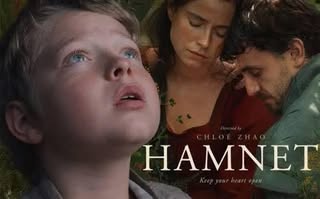
Friends, only recently did I finally see the film ‘Hamnet’, starring our own Oscar-winning Jessie Buckley and Paul Mescal. It is a powerful reflection on grief and how people cope. The film dramatises the family life of William Shakespeare and his wife Agnes, as they navigate the devastating loss of their eleven-year-old son, Hamnet. Grief strains their marriage because while Agnes cries, howls, and pours out her sorrow openly, William seems indifferent, almost unaffected by what has happened. In the end, though, Agnes attends a performance of William’s new play, Hamlet, and realises that the play itself is a tribute to their son – this was how he channelled his grief, the only way he knew how.
The play Hamlet, just like the film, poses one of humanity’s deepest questions: What happens to those who have gone before us?
Early in the play, young Hamlet stands in the cold of his castle, dressed in black, mourning; he is struggling to make sense of his father’s sudden death. When the ghost of his father appears on the battlements, he cries out to his son, “Remember me.” But for Hamlet, memory becomes a heavy burden – a duty tied to sorrow, and the fear of what lies beyond the grave. It is a portrait of human grief, but of grief that is left entirely on its own, staring into the dark without the light of hope.
Tonight, though, in this month of November, we gather in our church for a vastly different kind of remembrance. Like Hamlet, we know the sharp ache of loss. However, as people of faith our remembrance is not born out of despair or fear, nor is it a heavy burden we are forced to carry alone. When we hear the call of our loved ones to “Remember me,” it is not the cry of restless ghosts. It is their gentle invitation for us to trust in Jesus Christ, and to place them in our prayers to Him – the One who conquered death once and for all, and who now holds them in His mercy and peace.
The Church teaches us a profound and deeply comforting truth about the souls of the faithful departed: the souls of the just are in the hand of God, and no torment shall ever touch them. This is possible through our Baptism, where we are united to Christ in His death so that we might also be united with Him in His Resurrection. So, death for a Christian does not end a life, it transforms it. As our Preface will remind us of so beautifully, ‘life is changed, not ended.’
Shakespeare could only offer his son a shadow of life through words spoken on a stage, trying desperately to keep his memory alive. Tonight, we bring our sorrow here and pour it into something infinitely greater: the Holy Sacrifice of the Mass, where God does not merely offer us words of comfort, but gives our loved ones His Eternal Word, Jesus Christ, who alone can give them true, everlasting life.
The bond of love between us and our loved ones is never broken. Death cannot sever what Christ has joined together. Every tear we shed, every candle we light, and every prayer we whisper reaches across the threshold of eternity, uniting us with our loved ones at the altar of God. Above all, the Eucharist is our greatest gift to them – our best act of love for them, for through it comes salvation.
So tonight, do not let your grief be shadowed by fear or silence. Whether your sorrow is loud and raw, or quiet and carried deep within, place it and your loved ones, squarely into the merciful hands of Jesus.
Trust that the Good Shepherd has already gone out to meet them, and to prepare them for a new home in the light, peace, and joy of His Kingdom.
Amen.
May the Lord bless them and keep them.
May the Lord make His face to shine on them and be gracious to them.
May the Lord lift up His countenance upon them and grant them peace.
Fr. Richard