
Gospel & Reflection for the Eight Sunday in Ordinary Time.
Luke 6:39-45
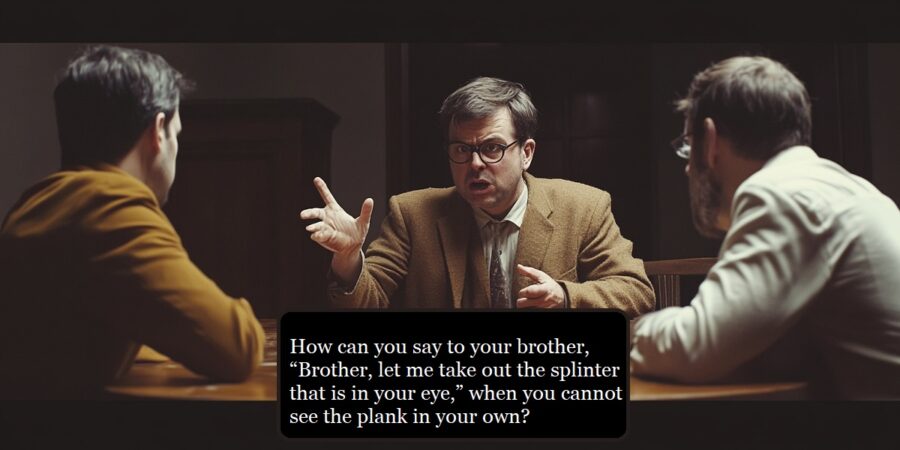
Jesus told a parable to his disciples: ‘Can one blind man guide another? Surely both will fall into a pit? The disciple is not superior to his teacher; the fully trained disciple will always be like his teacher. Why do you observe the splinter in your brother’s eye and never notice the plank in your own? How can you say to your brother, “Brother, let me take out the splinter that is in your eye,” when you cannot see the plank in your own? Hypocrite! Take the plank out of your own eye first, and then you will see clearly enough to take out the splinter that is in your brother’s eye.
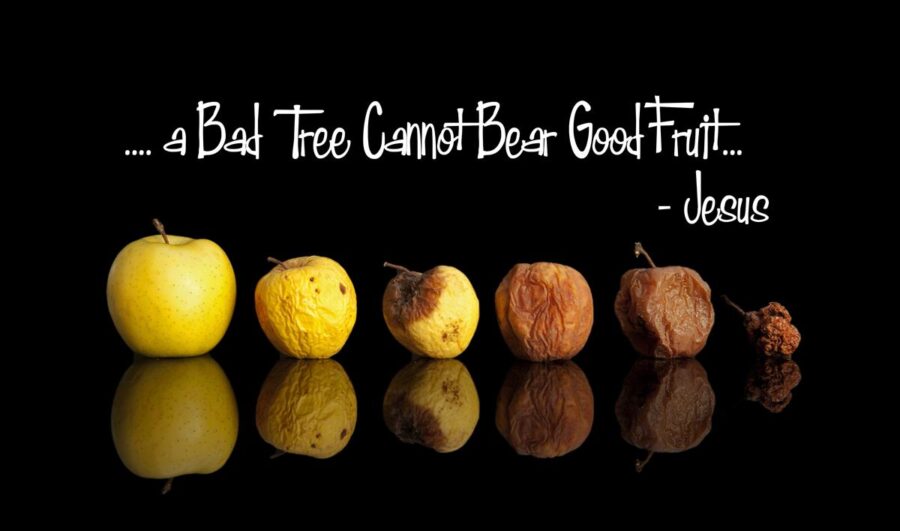
‘There is no sound tree that produces rotten fruit, nor again a rotten tree that produces sound fruit. For every tree can be told by its own fruit: people do not pick figs from thorns, nor gather grapes from brambles. A good man draws what is good from the store of goodness in his heart; a bad man draws what is bad from the store of badness. For a man’s words flow out of what fills his heart.’
Reflection
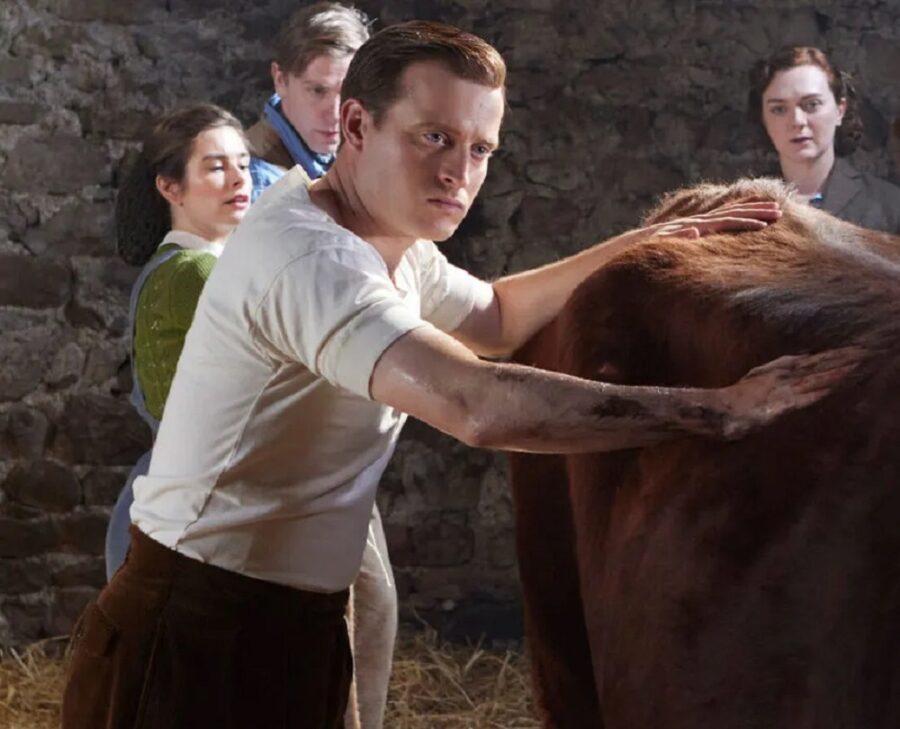
Friends, James Alfred Wight was a British veterinary surgeon and author. He is better known by his pen name, James Herriot, and is remembered for his series of books about veterinary practice, animals, and their owners in the Yorkshire Dales. This series began with a book titled ‘If Only They Could Talk,’ and eventually his books would sell nearly sixty million copies. They are known famously under their collective title ‘All creatures great and small.’ In the book ‘The Lord God made them All,’ Herriot recounts the story of his first caesarean section on a cow. He had not been trained in the procedure in his education, so he hired a student vet who led him to believe that he knew how to do a c-section on a cow in hard labour. He told the young vet, “You guide me and speak quietly because the farmer is listening.”
They started cutting but soon Herriot realised that the young vet had no idea what he was doing. They cut into one of the cow’s stomachs instead of the uterus. Herriot in frustration asked him, “Were you standing at the back of the class when this was being explained?” The young vet admitted that the back of the class was exactly where he had been! Herriot’s long-time skill and calm eventually saved the cow and her calf. He berated the student but apologised to him later. It was truly a case of the blind leading the blind.
In our Gospel this weekend, Jesus reminds all people of faith of one of our most important callings and challenges – to be able to lead others to God. It is our greatest joy and most demanding mission to bring others to God, as we ourselves move towards Him. But guiding others is demanding. Too easily we can lead ourselves and others astray.
So, what is it that truly fills our hearts, minds, and souls which can inspire others? Jesus refers to a ‘store of goodness’ and ‘a store of badness;’ convinced that whatever is at the deepest core of our being will always come forward. The truth will always emerge in some way. Words may not live up to actions, or actions may not live up to words.
An unsettling truth emerged Friday evening in the Oval Office of the White House. Everyone hoping for peace, speaking about peace, imagining peace through the first step of a trade agreement, and then a diplomatic shouting match, embarrassing for all involved. The verbal skirmish betrayed the real interpretation of peace for some involved. It was not peace for the sake of peace. It was not peace for the innocent Ukrainian people, or the world. It was peace at a price, peace for an advantage. It had to be a ‘pax americana’ and gratefulness for it! Yet, an American peace, this ‘pax americana’ was spoken of in the 1960’s by another, more admired President, who described such a peace as being no good for the world. The truth, literally, was shouted and pointed out for the world to hear. The true colours of those involved was clearly seen.
Friends, God calls us today to be true to ourselves and to Him. We can never express God’s love and message properly if our own words and actions contradict His message and example. If what we genuinely believe, think, and say contradicts all that God has ever said and done, then we cannot make our way to Him or bring others along with us.
Yet, in everything, God loves us. He speaks to our heart; He reaches out to our heart, and He asks us to allow Him to influence our heart and lives, and all that flows from them. God wants us to be ourselves, but the best version of ourselves; one that will be effective to our own lives and the lives of others.
We pray that our honest self, our true colours, will always mirror the best of our loving and caring God.
Fr. Richard