
Gospel & Reflection for the Second Sunday of Easter – Divine Mercy Sunday.
Reflection
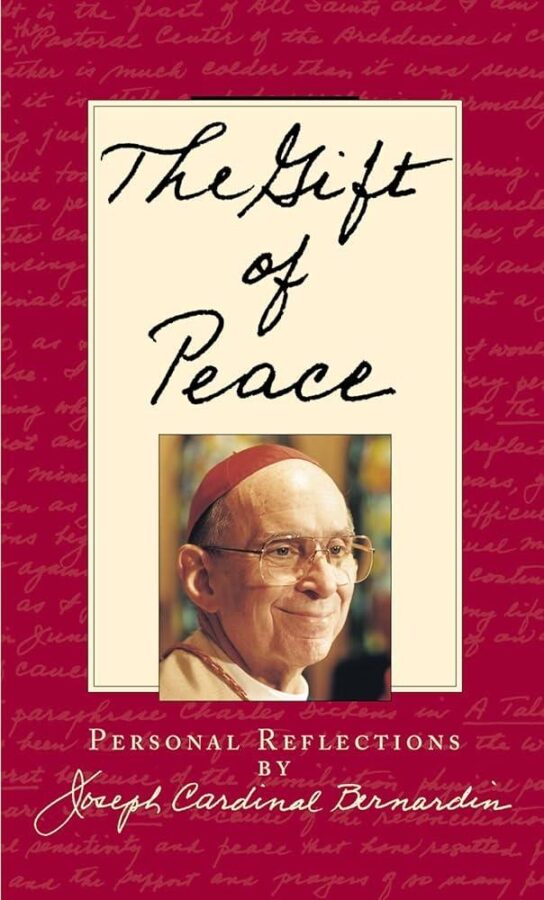
Friends, Joseph Bernardin was Cardinal Archbishop of Chicago from 1983 until his death in 1996. He had been told in August of 1996 that cancer, which had been in remission had returned and that he had only a short time to live. He died the following November. During those last three months, he wrote a beautiful and personal book covering the final three years of his life, titled, ‘The Gift of Peace.’ One of the most difficult experiences of those three years was a much-publicised accusation of misconduct, which was made against him by a young man called Stephen Cook.
As the case unravelled, Cook subsequently withdrew his accusation, acknowledging it as false but also that opponents of the Cardinal had encouraged it. In his book though, Cardinal Bernardin describes the reconciliation which he initiated with his accuser. Stephen Cook was dying of AIDS, and at their meeting he offered the Cardinal an apology which was gently accepted. In return, Cardinal Bernardin offered Stephen a gift, a Bible, in which he had inscribed words of loving forgiveness. He then showed him a century old chalice, a gift to the Cardinal from a man who asked him to celebrate Mass for his accuser with it.
Cardinal Bernadine and his accuser, celebrated Mass there and then together, with the Cardinal describing the experience as “a manifestation of God’s love, forgiveness, and healing,” one that he would never forget, and which was the most profound of his priestly life. But that experience made him speak of the Church as a family and the need for reconciliation within it: “In every family there are times when there is hurt, anger, or alienation. But we cannot run away from our family. We have only one family and so, after every falling out, we must make an effort to be reconciled.”
Well, a family being reconciled is what our Gospel today is all about.
We find first, most of the surviving Apostles huddled together. Dispirited and terrified, they are confronting in silence and regret their failure to be faithful to Jesus at the hour of His passion and death. But into their shame and remorse, the Lord comes, and standing among them, He greets them with peace and breathes the Holy Spirit upon them. In doing so, Jesus was reconciling His failed disciples back to Himself.
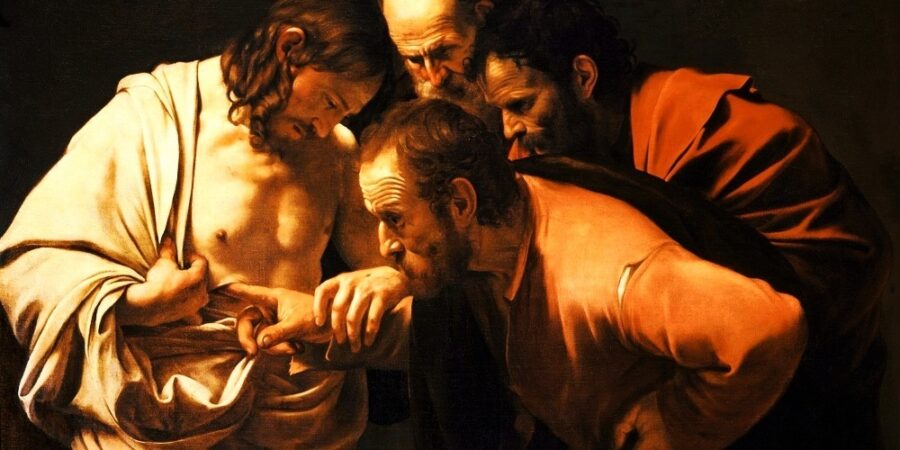
Recognising themselves as forgiven, their hearts are filled with joy, hope, and courage. However, one member of the family is missing. Thomas was absent when Jesus first appeared to them. He seems to have cut himself off from the others, deciding to face their shared demons alone. Yet, even still, the Lord reaches out to him, to unite and reconcile the family fully. He brings Thomas back in, saying: ‘Doubt no longer but believe.’
For so many reasons, the family, which is our Church, is not fully reconciled in the world today. We may be over a billion strong, but in that family of a billion people, many have left; others prefer argument to agreement, separation rather than connection. They are some who doubt, those who are apathetic, many who can never explain why they left faith behind them – it just happened. Others have had their faith shattered, have put their faith on pause, or have allowed their belief to be overwhelmed by the difficulties and realities of their society and our world.
Whatever the reason, whether we are fully committed, just hanging in there or bowed out altogether, still the Lord confronts us all, wherever we may be. Continually, He seeks us out and He invites us to more, invites us simply to believe and trust in Him.
So, into all the difficulties of life and faith, God presents Himself. He has His own way to meet each one of us, and with great love and affection, He offers to all the gift of peace. May we never separate ourselves from such a gift, but may many returns to the family to which they belong – a family that prays together saying – “My Lord, and my God.”
Fr. Richard