

Gospel & Reflection
Gospel & Reflection for the Twenty-Seventh Sunday in Ordinary Time.
Matthew 21:33-43
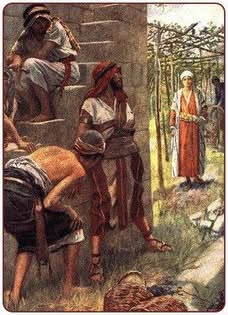
Jesus said to the chief priests and the elders of the people, ‘Listen to another parable. There was a man, a landowner, who planted a vineyard; he fenced it round, dug a winepress in it and built a tower; then he leased it to tenants and went abroad. When vintage time drew near he sent his servants to the tenants to collect his produce. But the tenants seized his servants, thrashed one, killed another and stoned a third. Next he sent some more servants, this time a larger number, and they dealt with them in the same way. Finally he sent his son to them. “They will respect my son” he said. But when the tenants saw the son, they said to each other, “This is the heir. Come on, let us kill him and take over his inheritance.” So they seized him and threw him out of the vineyard and killed him. Now when the owner of the vineyard comes, what will he do to those tenants?’ They answered, ‘He will bring those wretches to a wretched end and lease the vineyard to other tenants who will deliver the produce to him when the season arrives.’ Jesus said to them, ‘Have you never read in the scriptures:
It was the stone rejected by the builders
that became the keystone.
This was the Lord’s doing
and it is wonderful to see?
‘I tell you, then, that the kingdom of God will be taken from you and given to a people who will produce its fruit.’
Reflection
While known for having a notoriously difficult temperament, there is no denying that Sir Winston Churchill was remarkably effective in a crisis. His character was defined by a complex mix of stubbornness, relentless energy, and an absolute refusal to accept defeat. Taking office as Prime Minister in May 1940 during Britain’s ‘darkest hour’, his leadership style blended a domineering decisiveness with a unique power to rally a nation to action. His strengths were such that it is now hard to imagine that this grumpy, unmoving yet unifying politician, was once a vulnerable, insecure young man whose heart was easily broken.
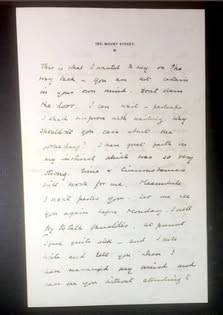
In his twenties, Churchill proposed to a lady named Muriel Wilson, the daughter of a wealthy shipping tycoon. Soon after though, Wilson rejected him. Pained and distraught, Churchill sent her a letter asking to see her again. In it he said, “Don’t slam the door…I can wait; perhaps I shall improve with waiting.” Pleading in a postscript, he added, “Send me one line back.” She never did, and later he wrote her one final letter where he acknowledged “Of course, you do not love me a scrap,” before adding wishfully of finding “a key…which would unlock both our hearts.” This futile yearning for her affection expresses well his emotional pain, and how heartbroken he is, having been rejected.
Few things hurt as much as rejection. Investing something of ourselves but with little return can leave us deeply discouraged and disheartened. It can make us slow to trust and even slower to ever give personally of ourselves again. The disappointment that comes with rejection is very painful and real. But, as our Gospel today reminds us, no one, not even the Lord Himself, is immune from it.
The Gospel parable of the wicked tenants was Jesus’ way of describing the divine scale of the love and relationship that God offers humanity, but a loving connection that often has been rejected so painfully. By describing a vineyard that has been meticulously planned, prepared, and then offered, this tells us immediately and beautifully that God is invested completely in us. We are not just thrown into existence and left fend for ourselves. God had everything ready.
He willed us into existence, gifted us with life, making a home for us and giving us what we need to flourish. He then poured Himself into our heart through the Holy Spirit and through His Son. Having done this, God expected that the fruit of it all would be seen in the goodness of our lives, in the kindness and understanding of our relationships with each other, and in how we would respond to God in thankfulness and praise.
But as the Prophet Isaiah reminds us of in the First Reading, and as Our Lord reiterates in the parable, there is the uncomfortable truth and reality that people and nations do not always bear the kind of fruit that God has a right to expect. We do not always live up fully to God’s hopes for us. The people of Jesus’ day rejected Him and crucified Him. In our own time, our rejection takes the form of selfishness, war, and a lack of true compassion and understanding. People and nations often think only of themselves, not others, and especially not of their accountability to God.
How often have we heard it said, regardless of the consequences, “This is my life, my body, my choice.” Or: “These are my feelings, my rights, my opinions.” We endlessly see on tv and social media how cruel people and countries can be to each other and how the preciousness of life is diminishing. In so many ways, we are moving further away from our responsibilities to ourselves, to others, and especially to God. We can easily forget that the vineyard of our life and the world has been gifted to us and that we have a liability to care and nurture it for the better.
Yet, despite any rejection of our responsibilities and God, all is not lost and nothing and no one is ever hopeless. The parable reminds us in the end that God never gives up on us. Whatever disappointment or pain we might cause Him, God continually works to bring new life out of it all. He never slams the door on us. He waits, and we have an opportunity to improve in the waiting; to send Him something back. If we want to, and if willing to, we can always find the key that unlocks our heart, and which brings us and the world back to God and His ways. The rejected stone can always become the keystone.
Friends, the good fruit of the kingdom is evident in all your lives and in the world, thanks be to God. We have all experienced kindness, generosity, and understanding in others, just as others have experienced it in us. Yet, there is always room for an even more abundant harvest, which God rightly expects. We pray today for the grace never to be complacent with God’s generosity and patience, but that more and more we shall strive to become all that God desires us to be in the fruit of what we say, do, and believe.
Fr. Richard