

Gospel & Reflection
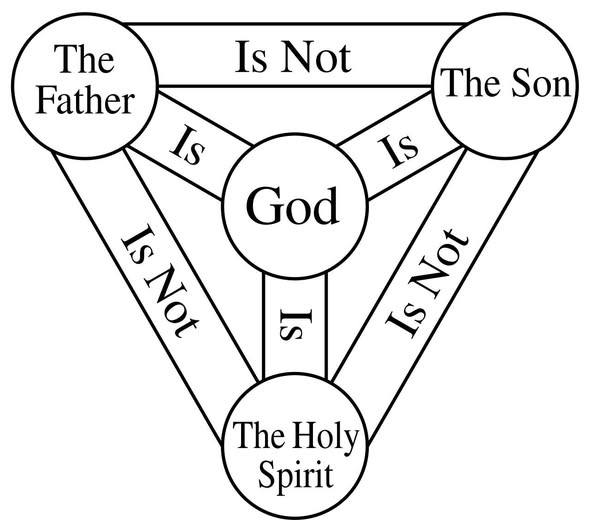
Gospel & Reflection for the Feast of the Most Holy Trinity.
John 3:16-18
God so loved the world that he gave his only Son,
so that everyone who believes in him might not perish
but might have eternal life.
For God did not send his Son into the world to condemn the world,
but that the world might be saved through him.
Whoever believes in him will not be condemned,
but whoever does not believe has already been condemned,
because he has not believed in the name of the only Son of God.
Reflection
Friends, in medieval times, the most widely read book was the Bible. The second most popular book was ‘The Legenda Aurea’ or ‘The Golden Legend’. The word ‘legend’ as used in the title does not refer to a made-up story, as in the modern sense of the word. In medieval Latin, the word ‘legenda’ simply meant ‘things to be read’. ‘The Legenda Aurea’ was basically a Preacher’s handbook, filled with accessible stories from the lives of the Saints and biblical figures, but also miracle stories, moral illustrations and explanations of Catholic feast days, which could be used in sermons or read aloud in Churches. Among the many stories included in this book is a much-repeated story about St. Augustine, one of the intellectual giants of the Church.
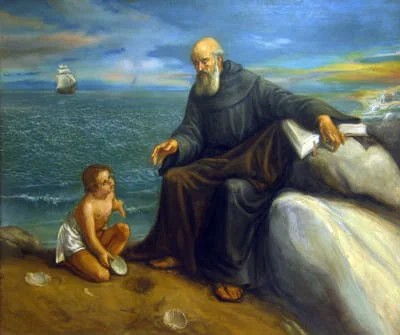
The story goes that as he was walking by the seashore one day, attempting to formulate an intelligible explanation for the mystery of the Trinity, he saw a small boy on the beach who had dug a hole in the sand. The boy was running back and forth from the sea to the hole, filling the hole with seawater from a shell. “What are you doing?” asked Augustine. “I am emptying the sea into this hole,” the boy explained with an innocent smile. “But that is impossible!” said Augustine. The boy replied, “I have as much of a chance of doing this as you have of explaining the vast mystery of the Holy Trinity!”.
The message of the story obviously is that while thinking about and connecting to God is never useless, still the mystery of God does exceed even the greatest human intellect. Augustine devoted his life to exploring many Christian mysteries, especially the Trinity, with remarkable intellectual depth. But even he once said, ‘If you have understood, then what you understand is not God.’ It proves that the mystery of God is overwhelming, even for the most searching of minds.
So, what can we do then to even know a spec of what the mystery of the Trinity, what the mystery of God is about? Well, even though a mystery, this does not mean we can never appreciate what the Trinity is and its meaning in our lives.
For example, some people say that they do not believe in God because they cannot see Him. They will not accept what they cannot see, hold, touch, or prove in a scientific experiment. However, there are numerous truths and realities which cannot be proven either; yet we still believe and hope in them. For example, who can say that they have ever physically seen, held, touched, or proved in a laboratory the reality of courage, love, truth, or faith?
Just like God, these are invisible too, but still, we know them, feel them, recognise them, and know them to exist and to be true.
We sense courage and recognise it in people, especially in difficult experiences or situations. We hopefully experience love every day of our lives and are grateful to those who love and care for us, even when they are not around. We know truth when we hear it, and we can see it in someone’s eyes, expression, or actions. We are often drawn to holy people sensing their faith and often ask them to pray for us. We see, sense, and recognise many things of immense importance in so many ways.
So too with God. He may be beyond our comprehension, but He is not fully beyond our senses or intuition, our feelings, or lives. In the beauty of the world around us, God makes Himself know. In the love we receive and show, God is there. In our reaching out, our giving and consideration of others and they to us, there is God. When we reach into our heart, mind and soul, and wonder, we are reaching for and pondering the mystery that is God.
Friends, we are finite beings trying to understand the infinite. However, God reveals His greatness in the small everyday events, happenings, and experiences of our lives. We should never overlook these things or underestimate them because often this is our direct contact with God; our direct experience of the mystery that is the Trinity.
We will not always have the words to describe God, but we will always sense, feel, and recognise Him. When we can catch some sense of God’s presence in those ways, it will change and amaze us. Without having to prove anything, it lets us know that what we believe is true and whom we believe in, is real: God the Father, Son, and Spirit.
Fr. Richard
See less