

Gospel & Reflection
Gospel & Reflection for the Sixteenth Sunday in Ordinary Time.
Matthew 13:24-43
Jesus proposed another parable to the crowds, saying:
“The kingdom of heaven may be likened
to a man who sowed good seed in his field.
While everyone was asleep his enemy came
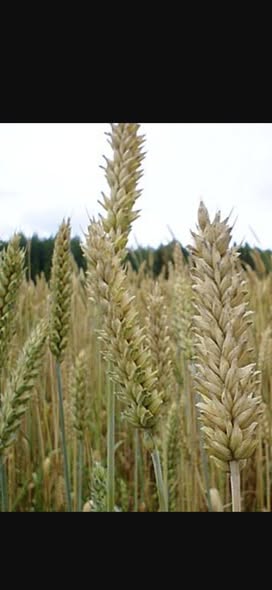
and sowed weeds all through the wheat, and then went off.
When the crop grew and bore fruit, the weeds appeared as well.
The slaves of the householder came to him and said,
‘Master, did you not sow good seed in your field?
Where have the weeds come from?’
He answered, ‘An enemy has done this.’
His slaves said to him,
‘Do you want us to go and pull them up?’
He replied, ‘No, if you pull up the weeds
you might uproot the wheat along with them.
Let them grow together until harvest;
then at harvest time I will say to the harvesters,
“First collect the weeds and tie them in bundles for burning;
but gather the wheat into
Reflection
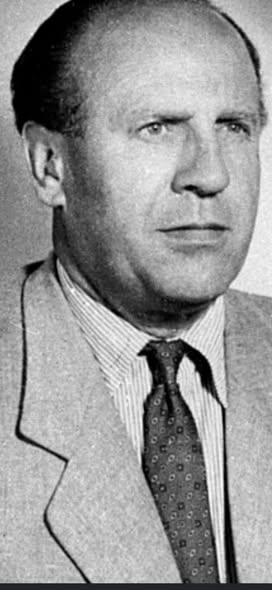
Friends, I came across the powerful and Oscar winning film ‘Schindler’s List’ on television recently. It is one of those films that once you start watching it, you can’t turn away from it, no matter how many times you may have seen it. As you know, it was based on the true story of Oskar Schindler – a German industrialist who protected and saved the lives of over 1300 Jews from the Nazi’s, during the Second World War.
I remember reading the book on which the film was based many years ago titled ‘Schindler’s Ark’ by Thomas Keneally. In that book, one of the people that Schindler saved said of him: “He was our father, our mother, our only hope. He never let us down.” But the book also pointed out that Oskar Schindler was a womaniser, perpetually unfaithful to his wife. He was also a paid-up member of the Nazi party, determined by his own admission to come to the end of the war with “trunks full of money”. To achieve this, he purposefully exploited Jewish prisoners as a source of cheap labour in his factories.
But as the war dragged on, he became increasingly disturbed by Hitler’s ‘final solution’. It was this that led him to courageously protect, not exploit, his workers from death camps, at considerable risk to himself. He was twice imprisoned by the Nazis and by war’s end, he was on the run, captured later by the Russians. Those “trunks full of money” eluded him for the rest of his life and often poverty stricken, he relied on the generosity of those whom he helped to save, to survive.
Now, was Oskar Schindler a good or bad man?
Were we to look at only some aspects of his life, we might judge him harshly. Knowing more about him, we might say he wasn’t all bad, happy to overlook his faults because of what he done when the realisation of his ambitions and actions finally dawned upon him. But maybe His life simply proves to us all that the line dividing good and bad cuts finely through the heart of every human being and at times, they can be so intertwined, one cannot be easily separated from another.
Regrettably, tolerance and recognition of our human shortcomings are in short supply. We live now in unforgiving times.
People seem very happy to easily separate the various aspects of people’s lives and make severe judgments on them. The force and farce of so called ‘cancel culture’ is frightening. Whatever good there is within a person or any decent act that they might have done, if some badness, mistake, or imperfection is discovered, then they are open to be cancelled; isolated, left out in the cold, forgotten. Promoters, admirers, and subscribers of such culture, they must be the most perfect of people. I often wonder do they not fear that the weight and expectation of such perfection might just fall back on them? Were that to happen, might it change their point of view? Might they hope for a second chance?
Not for nothing does the Book of Wisdom remind us that God expects: ‘…the virtuous man must be kindly to his fellow man’…because by doing so we give hope ‘…that after sin [God] will grant repentance’. In short, God cancels no one. We are never left hardheartedly to be victims of our own mistakes or misfortune. We are continually given the opportunity to begin and begin again. With God, there is always forgiveness, there is always a second chance and more, if we desire it.
In our Gospel, Jesus gently holds up a mirror to us allowing us to see every aspect of our nature – the good and the bad – the light and the darkness – our virtues and our flaws. The wheat and darnel of the Gospel existed together; they grew side by side until the time arrived where they could be recognised for what each was and were separated properly. The same is true for us. We know our strengths, but we also know our weaknesses. One of the great challenges of life and faith is facing up to both and separating them; making our strengths stronger and working with God’s grace, to overcome our limitations.
Through the readings, Jesus invites us to leave judgment to God, and for us to simply commit ourselves to working for all that is good and decent in our lives and in the world. None of us are perfect, yet we are still called to holiness, we are all called to be Saints. May we then never be afraid to confront ourselves honestly and by the light of God’s grace, be the people that He calls us to be.
Fr Richard