
Gospel & Reflection
Gospel & Reflection for the Twenty-Second Sunday in Ordinary Time.
Matthew 16:21-27
Jesus began to show his disciples that he must go to Jerusalem and suffer greatly from the elders, the chief priests, and the scribes,
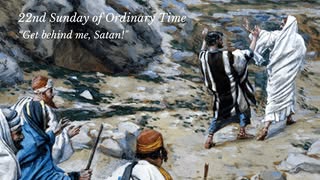
and be killed and on the third day be raised. Then Peter took Jesus aside and began to rebuke him, “God forbid, Lord! No such thing shall ever happen to you.” He turned and said to Peter,
“Get behind me, Satan! You are an obstacle to me. You are thinking not as God does, but as human beings do.”
Then Jesus said to his disciples, “Whoever wishes to come after me must deny himself, take up his cross, and follow me. For whoever wishes to save his life will lose it, but whoever loses his life for my sake will find it. What profit would there be for one to gain the whole world and forfeit his life? Or what can one give in exchange for his life? For the Son of Man will come with his angels in his Father’s glory, and then he will repay all according to his conduct.”
Reflection
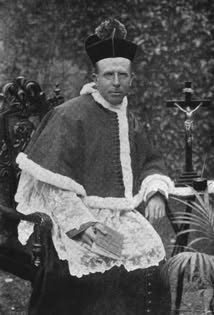
Friends, a forgotten great of Irish life and faith is Patrick Sheehan, a Priest belonging to the Diocese of Cloyne, who died in 1913. He was better known as Canon Sheehan and in his day, he was a celebrated author and strong political activist.
One of his most popular books was titled ‘My New Curate’ and it told the tale of an elderly Parish Priest in the West whose idyllic and tranquil life was disturbed by the arrival of a brash newly ordained, the books’ title character. One of the subplots to the novel concerned the many varied but unsuccessful attempts to convert a local man to the Catholic Faith. The PP, Fr. Dan, tried tirelessly but all his efforts were in vain. The curate of the title, Fr. Edward, tried as well but with even worse results, to the concealed relief of Fr. Dan!
The man does eventually come to faith and what brings him to faith were not the arguments of reason, philosophy, or theology but the patient acceptance and surrender, of a young girl to what appears to be a terminal illness. The girl’s witness of trust and prayer, her placing of her life and suffering into God’s hands, was the final moment of grace that answered all the man’s questions and doubts about God. Did God exist? He had to because who else could comfort, and make comfortable, such an innocent young girl with such a cross to bear.
Well, if there is anything that makes us question or get angry with God, anything that makes us doubt or lose faith in Him, it has to be suffering. Among the most often asked, and difficult question to answer regarding our faith is “How can God be good but allow bad things to happen?” We have all, I am sure, personal reasons to ask that question. We asked it no doubt, looking at those unbelievable images from Nepal/Tibet over the last few days. Thousands of innocent people were washed away in seconds.
At such times, with no answers, no words, no solutions, people scramble for some answer and often say: “It was God’s will?” Yet, nothing could be further from the truth. God does not will or cause suffering, pain, or tragedy. It is not the will of God for us to experience heartbreak or disasters in life. But when they do happen, why does God allow them?
Well, from the first moment that God created everything outside of Himself, He gave up voluntarily, a degree of His power. In creating the world and all the laws of nature that govern it; in creating all types of life, especially human life with its gift of free will, from that moment, God relinquished some of His control on this world. This does not mean that He is powerless but does means that He is not a tyrant, controlling and cajoling everything, moving and shaking our world to His own pleasure, at the cost of our pain. That is not God.
The God who created and loves us, loves us through freedom. As such, we cannot expect or demand Him to control and prohibit some things because we don’t want them but still give us everything else because we do. We cannot expect God to intervene and prevent what we can’t control but then to leave us alone with the things that we can. The world and life that God gave us, is a world and life that sees freedom as the greater good, despite the pain that we can sometimes experience with it. But always we trust that God will bring about the greatest good, even though the worst of things.
St. Peter never imagined anything worse, would never experience anything as traumatic as the murder of Christ on the Cross. It was why he reacted so strongly in our Gospel today. Jesus’ suffering and dying was not the way things were meant to be! He wanted everything to be blissful! Being told that this would not be the case, He erupts in fright and panic. In response, Jesus is direct and honest but reassuring. The worst thing would not be the last thing.
With Jesus’ resurrection, denial gave way to faith, pain gave way to love, and despair gave way to hope. The faith, hope and love that Peter finally experienced, was what Christ had always promised, it was just delivered not as Peter had envisaged, expected, or wanted.
Friends, life throws much that is unexpected, unwanted, and difficult at us too. In everything though, God is with us. That was the first promise God gave to humanity, and He has never broken it. He enters our joys and sorrows and fills us with His hope and hope never disappoints. May we never underestimate the hope and healing found in God’s love and presence, in good times and bad.
Fr. Richard